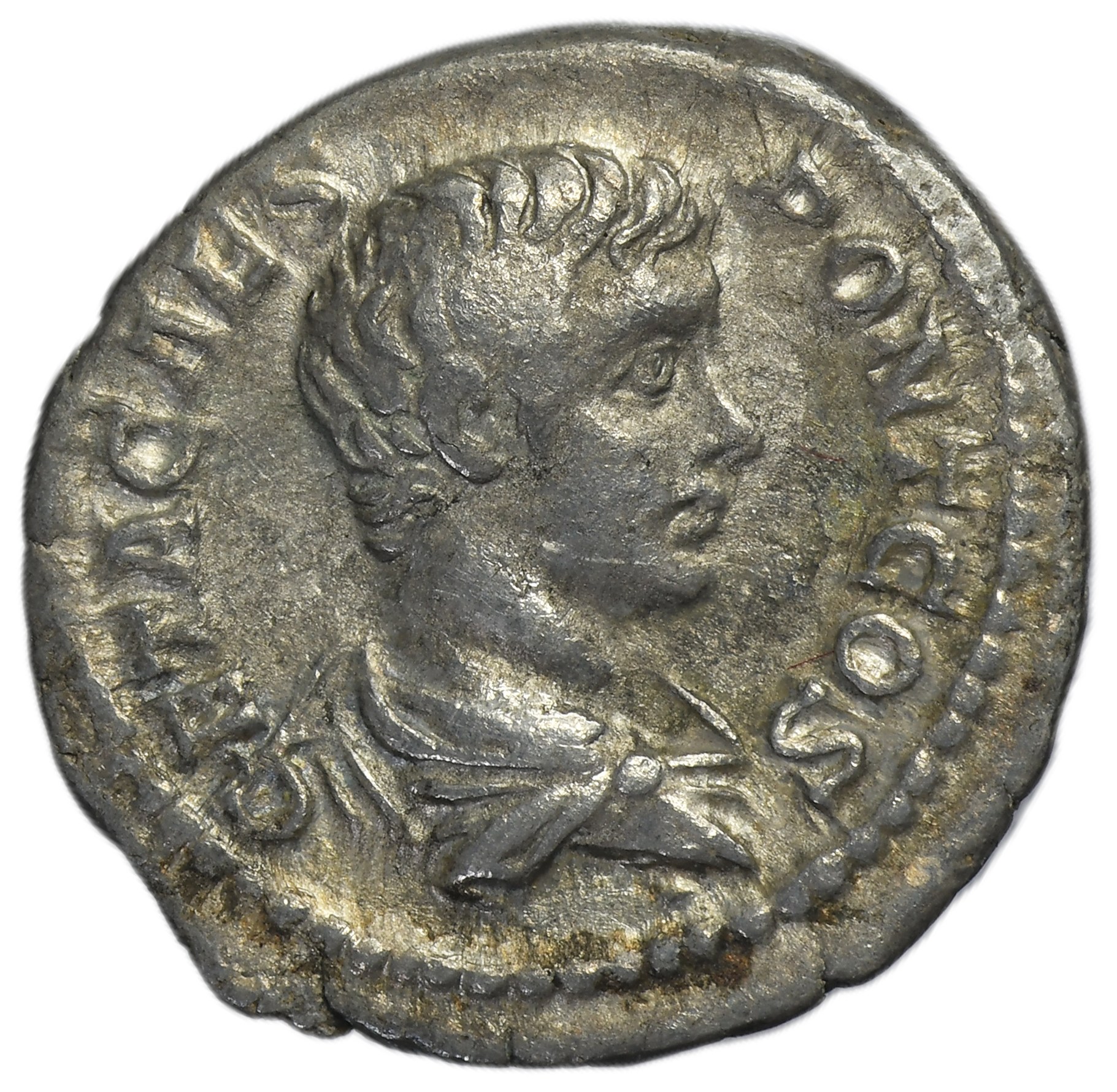
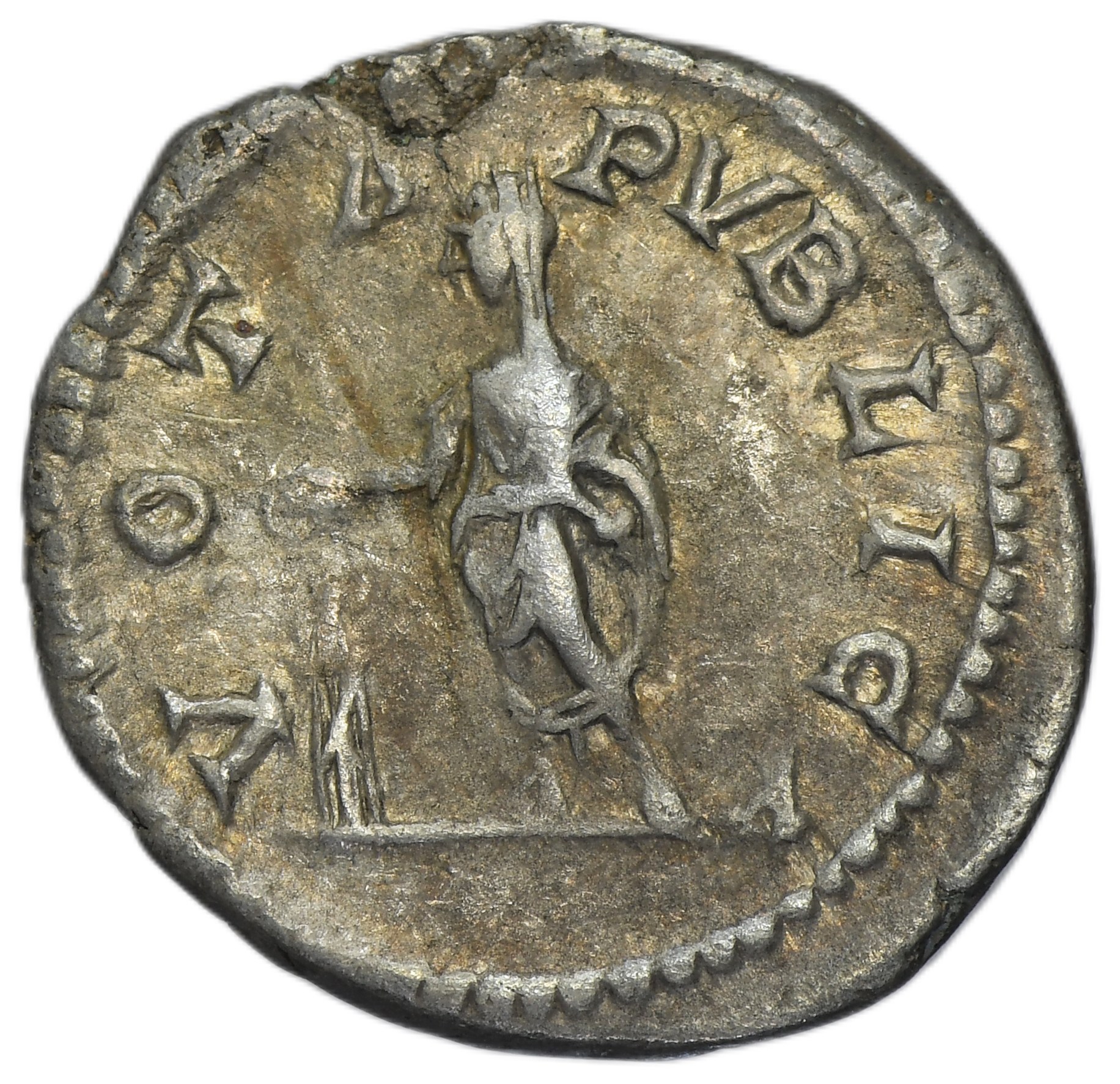


Denarius of Geta (AD 198–209 as Caesar), struck at the Rome mint in AD 202, belongs to an issue from the period of joint rule with Septimius Severus, during which particular emphasis was placed on the religious dimension of power and the participation of the heir in official state rituals.
The obverse shows a bust of the young Caesar facing right, with the legend GETA CAES PONT COS, identifying him as Caesar and referring to his priestly office (pontifex) and consul.
The reverse depicts Geta standing left, performing a sacrifice over an altar, with the legend VOTA PVBLICA. This scene refers to the public vows (vota publica) made on behalf of the state and the emperor, an important element of Roman religious practice and state ceremonial. The portrayal of the young Caesar engaged in sacrifice emphasizes his role in maintaining the religious order and securing the prosperity of the empire.
Roman Imperial
Geta (as Caesar, 198-209), Denarius 205, Rome mint
Obverse: bare headed bust right
GETA CAES PONT COS
Reverse: Geta standing left, sacrificing out of patera over tripod and holding roll
VOTA PVBLICA
Diameter 19 mm, weight 3.44 g











