


Denarius of Geta (AD 209–212 as Caesar), struck at the Rome mint in AD 203, belongs to an issue from the period of joint rule with Septimius Severus, during which particular emphasis was placed on presenting the heir as a guarantor of the state’s prosperity.
The obverse shows a draped bust of the young Caesar facing right, with the legend P SEPT GETA CAES PONT, identifying him as Caesar and referring to his priestly office (pontifex). The portrait type corresponds to official Roman issues from the early stage of his public career.
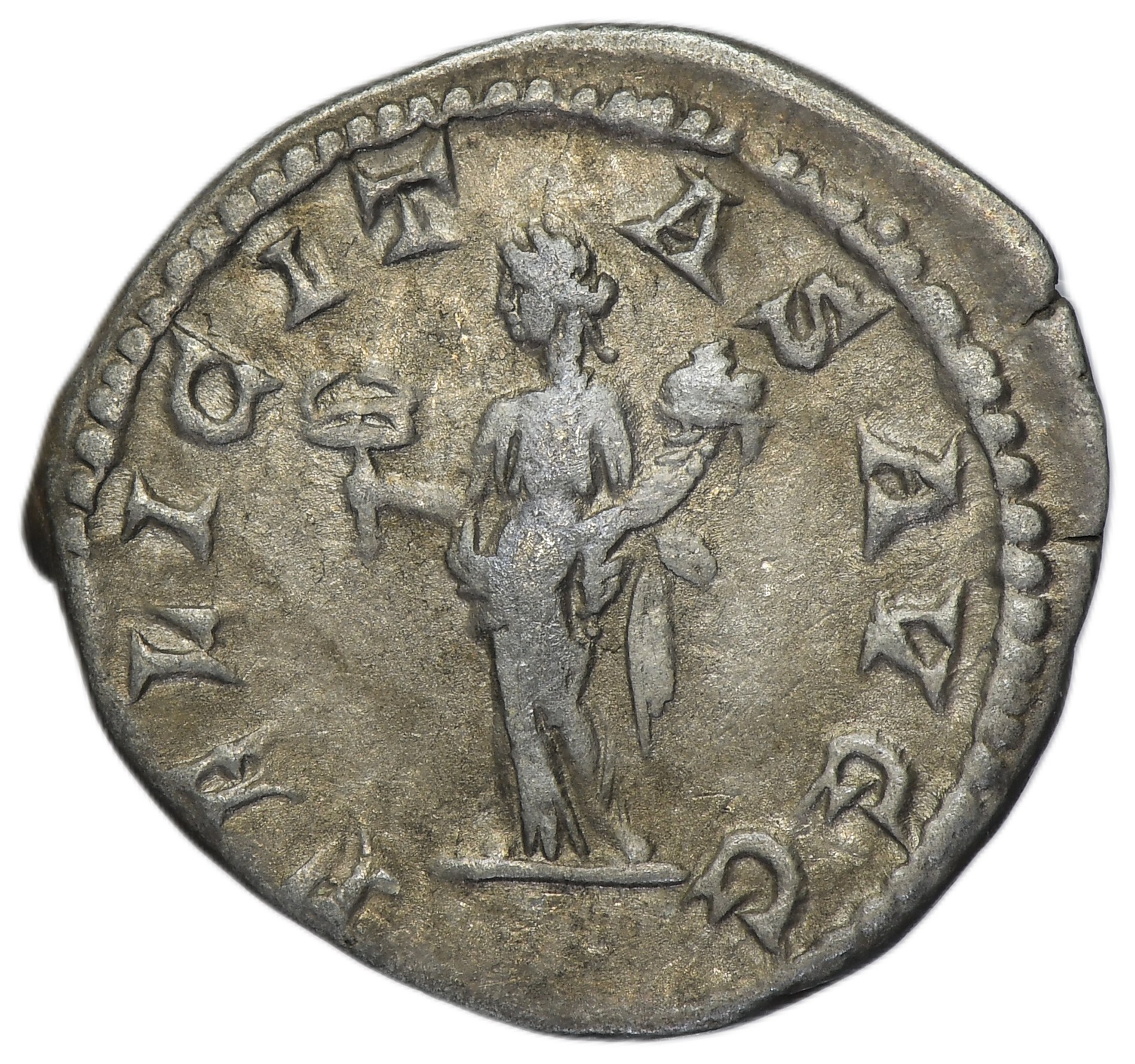
The reverse depicts Felicitas standing left, holding a caduceus and a cornucopia, with the legend FELICITAS AVGG. Felicitas, as the personification of happiness and prosperity of the state, belongs to the core iconographic repertoire of Roman coinage. The caduceus symbolizes harmony and balance, while the cornucopia signifies abundance and well-being.
The legend FELICITAS PVBLICA (“augusti prosperity”) forms part of the Severan dynastic propaganda program, emphasizing stability and prosperity under imperial rule. Its inclusion on issues depicting the young Caesar was intended to present him as the future guarantor of this prosperity.
Roman Imperial
Geta (209-212), Denarius as caesar 200-202, Rome mint
Obverse: bare and draped bust right
P SEPT GETA CAES PONT
Reverse: Felicitas standing left, holding a caduceus in right hand, cornucopiae in left
FELICITAS AVGG
Diameter 19 mm, weight 3.81 g











