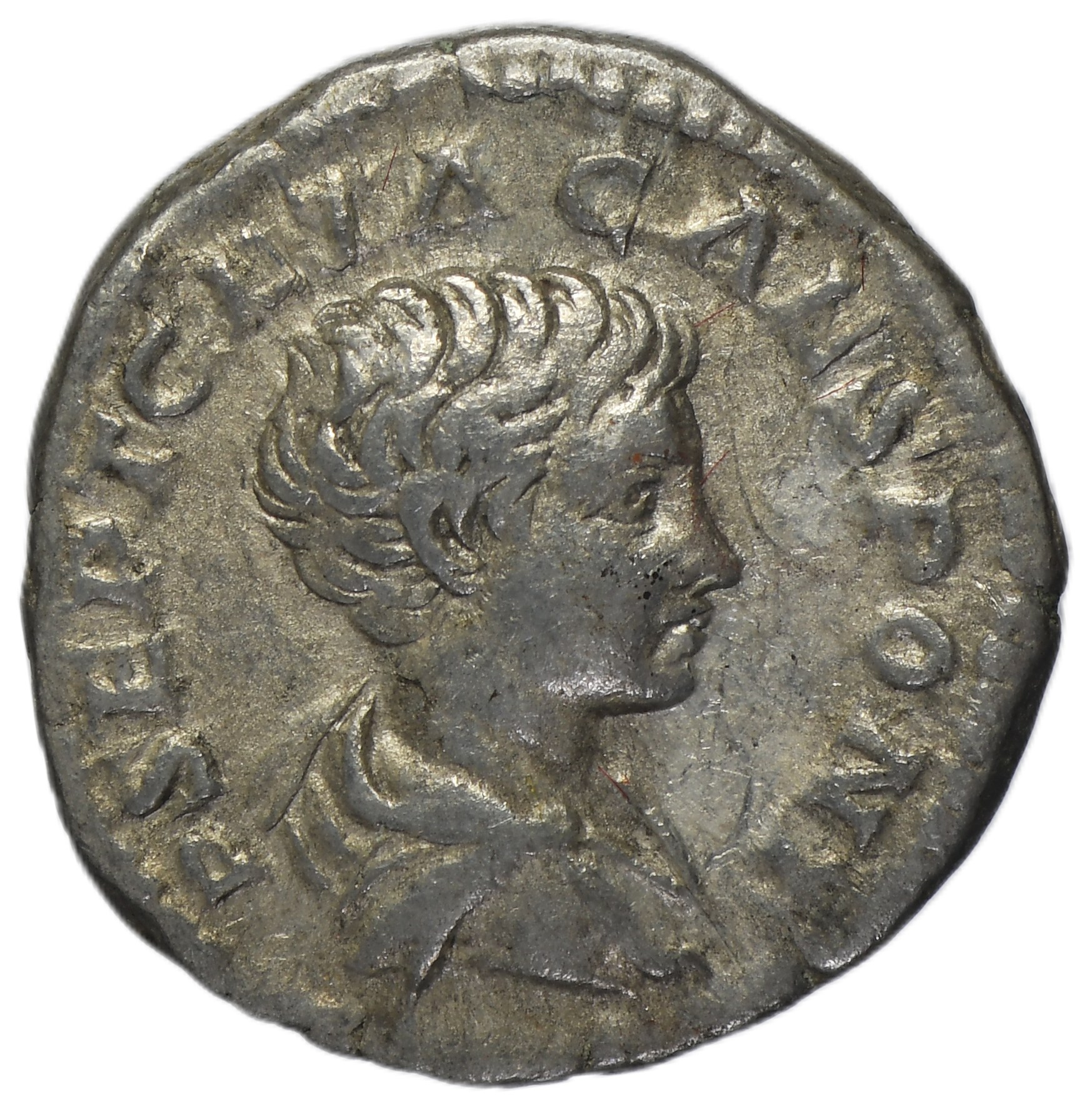


Denarius of Geta (AD 198–209 as Caesar), struck at the Rome mint, belongs to the early Severan issues produced when the son of Septimius Severus was formally presented as heir to the throne and an active participant in the public life of the state.
The obverse shows a bust of the young Caesar facing right, with the legend P SEPT GETA CAES PONT, indicating both his political rank and his priestly office (pontifex).
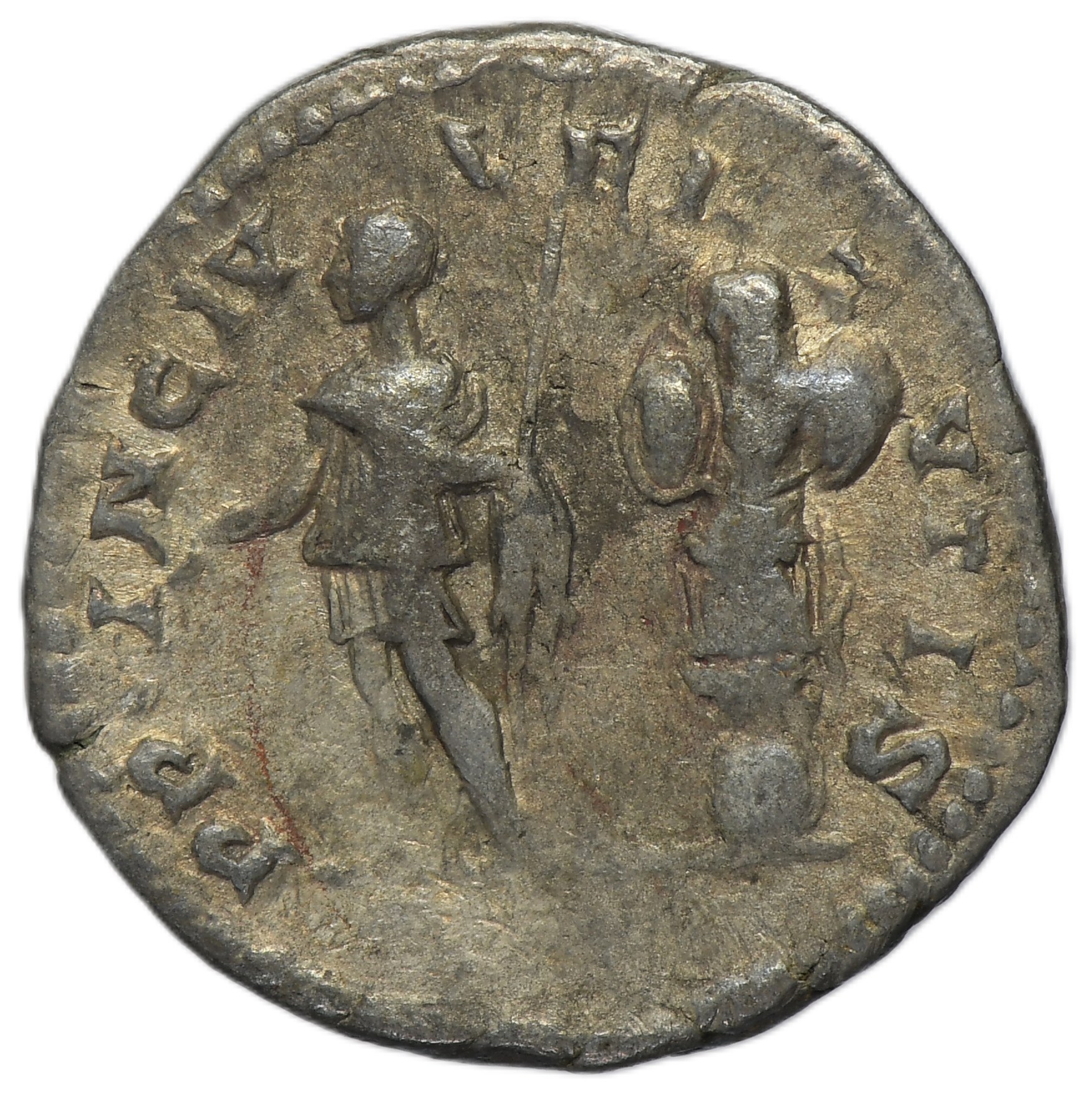
The reverse depicts Geta standing left, holding an olive branch and a spear, with a trophy placed behind him, accompanied by the legend PRINC IVVENTVTIS. The title Princeps Iuventutis has a long-established tradition within Roman imperial ideology and was conferred upon designated heirs as a mark of their elevated status. The iconography is deliberately structured: the olive branch symbolizes peace and clemency, while the spear and trophy refer directly to military authority and victory.
This combination reflects a well-documented Severan propaganda model, presenting the young successor as embodying both civil virtue and martial capability, and thus as a legitimate future ruler.
Roman Imperial
Geta (as Caesar, 198-209), Denarius, Rome mint
Obverse: Bare-headed and draped bust of Geta to right, seen from behind
P SEPT GETA CAES PONT
Reverse: Geta, as prince of the youth, standing front in military attire, head to left, holding baton in his right hand and scepter in his left, behind to right, trophy
PRINC IVVENTVTIS
Diameter 18 mm, weight 3.34 g











