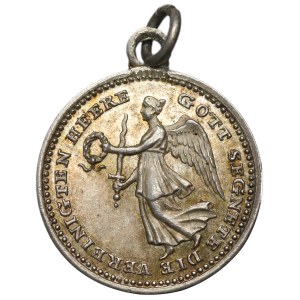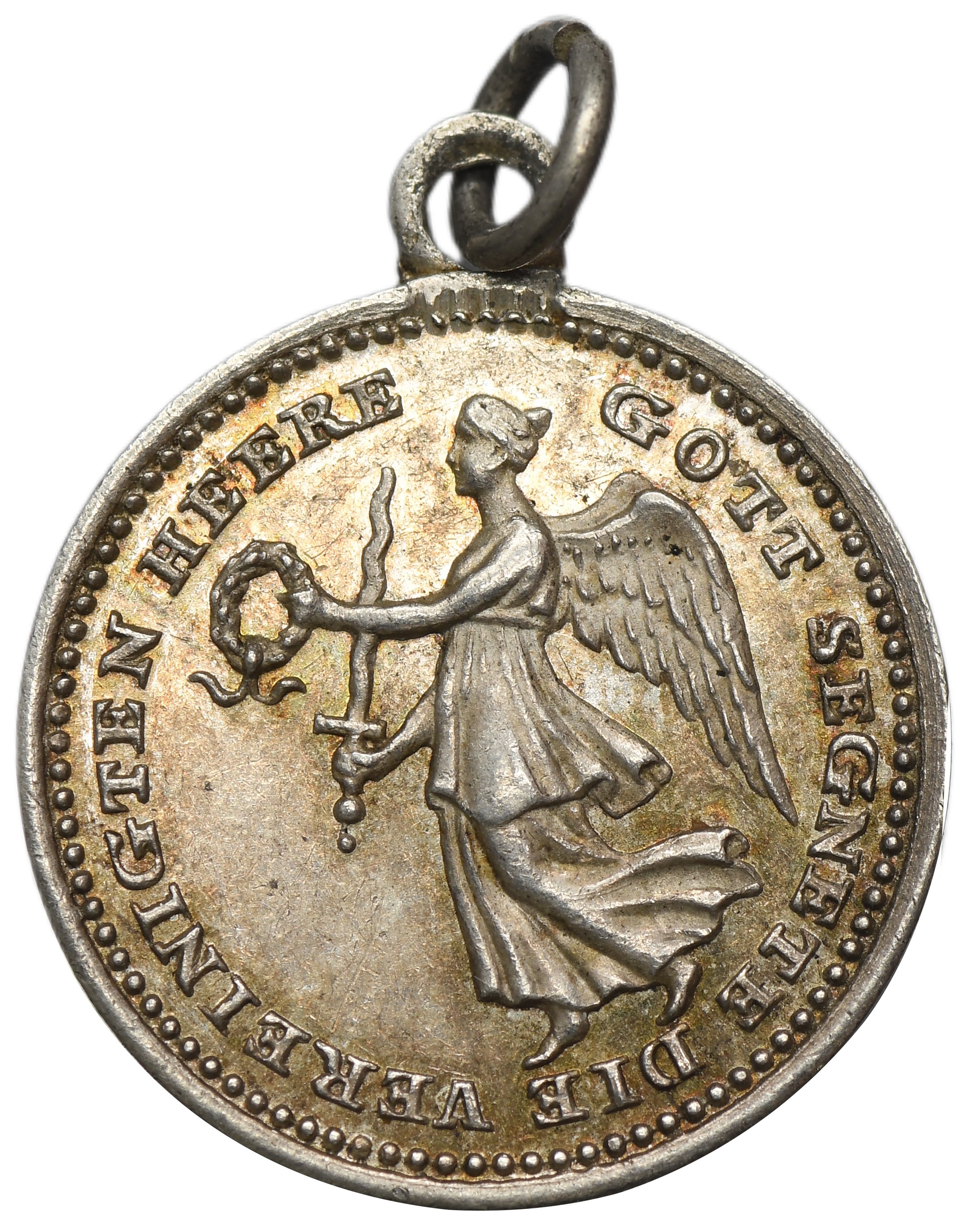
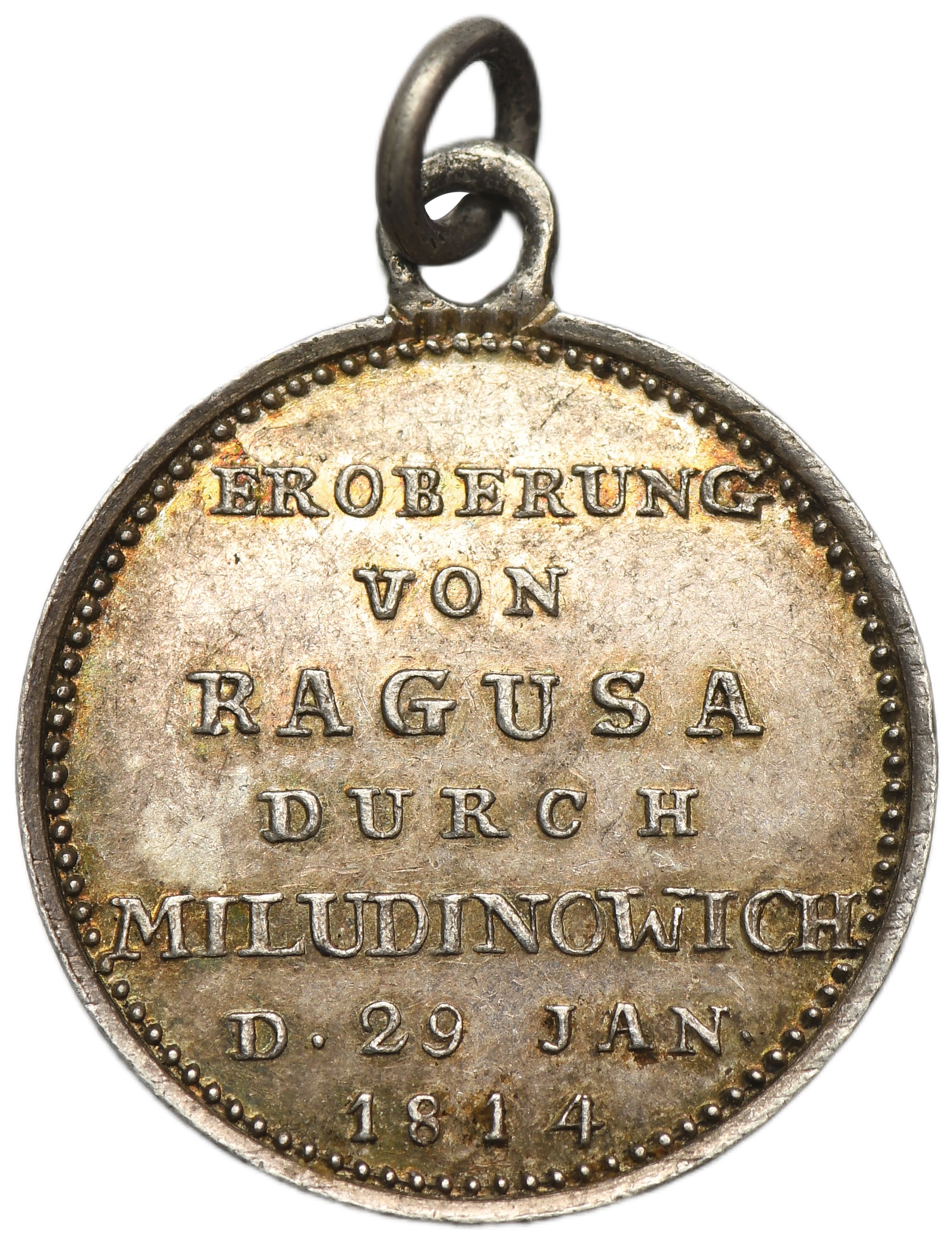
A small silver commemorative medal, known as a Siegespfennig, struck to commemorate the capture of Ragusa—present-day Dubrovnik—by the Allied forces in January 1814. Designed by Daniel Friedrich Loos, it belongs to a series of miniature medals celebrating victories over the Napoleonic forces.
Ragusa had remained under French occupation since 1806. In 1808, Napoleon formally abolished the centuries-old Republic of Ragusa and incorporated its territory into the French Illyrian Provinces.
In January 1814, the city was besieged by Austrian Croatian troops under General Theodor Milutinovich, local insurgents and forces of the British Royal Navy commanded by Captain William Hoste. British artillery bombarded the French fortifications from the sea, Mount Srđ and the island of Lokrum. Isolated and weakened, the French garrison commanded by General Joseph de Montrichard capitulated on 27 January, with Allied troops entering the city over the following days. The medal commemorates the capture of Ragusa with the date 29 January 1814.
The inscription credits Milutinovich as commander of the Austrian forces, although the Royal Navy and local Ragusan troops also played an important role in the success of the siege. The fall of the French garrison ended almost eight years of occupation. The former Republic of Ragusa was not restored, however, and its territory subsequently passed under Habsburg rule.
The obverse depicts Victoria, the winged goddess of victory, holding a flaming sword and a laurel wreath. The inscription GOTT SEGNETE DIE VEREINIGTEN HEERE translates as “God blessed the united armies.”
Medal with a suspension loop and ring.
An interesting relic of the Adriatic campaign, commemorating the end of French rule in the historic Republic of Ragusa.
Obverse: Winged Victoria holding a flaming sword and laurel wreath.
GOTT SEGNETE DIE VEREINIGTEN HEERE
Reverse: Inscription in seven lines
EROBERUNG / VON / RAGUSA / DURCH / MILUDINOWICH / D. 29 JAN. / 1814
Silver, diameter 15 mm, weight g