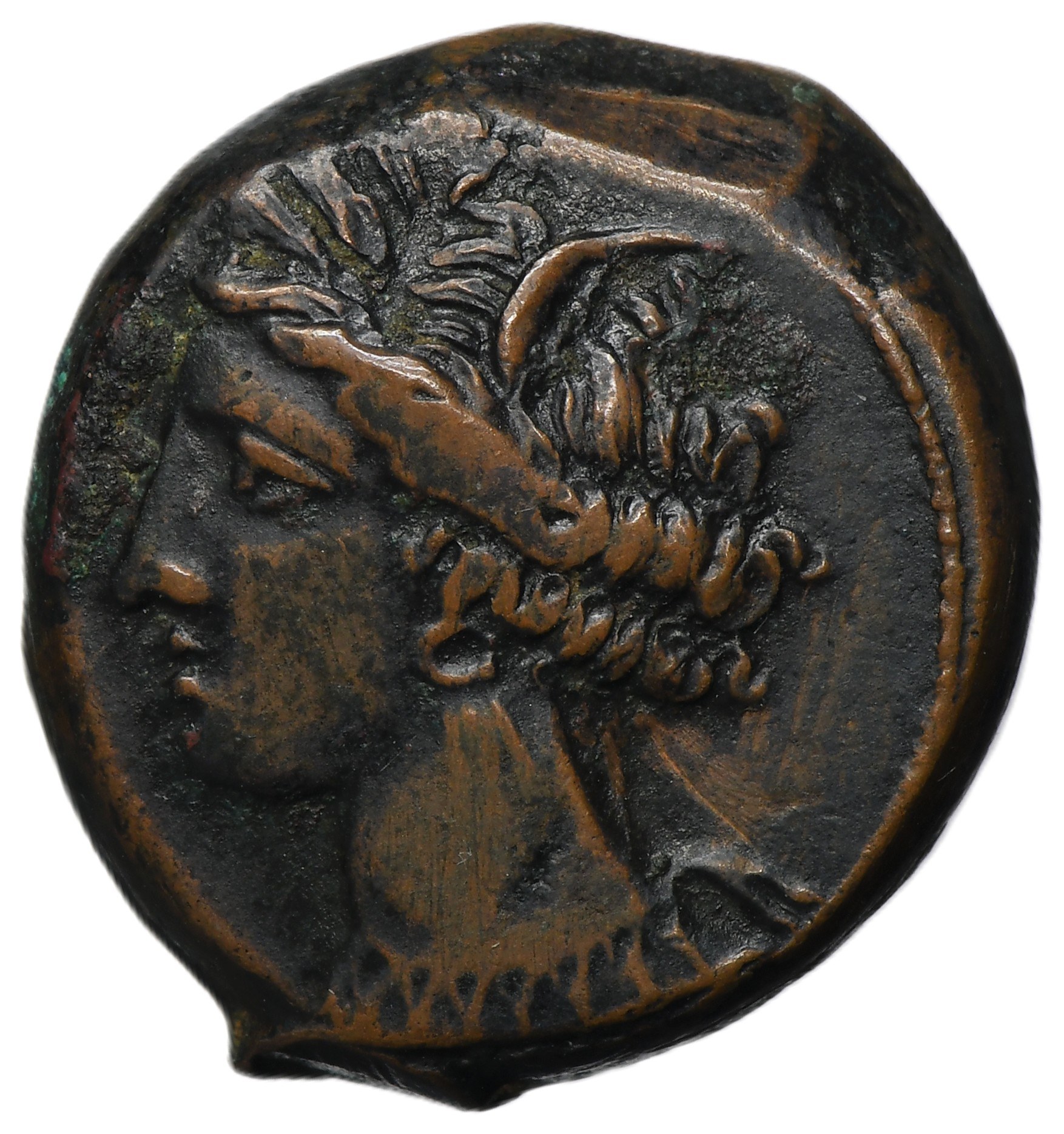
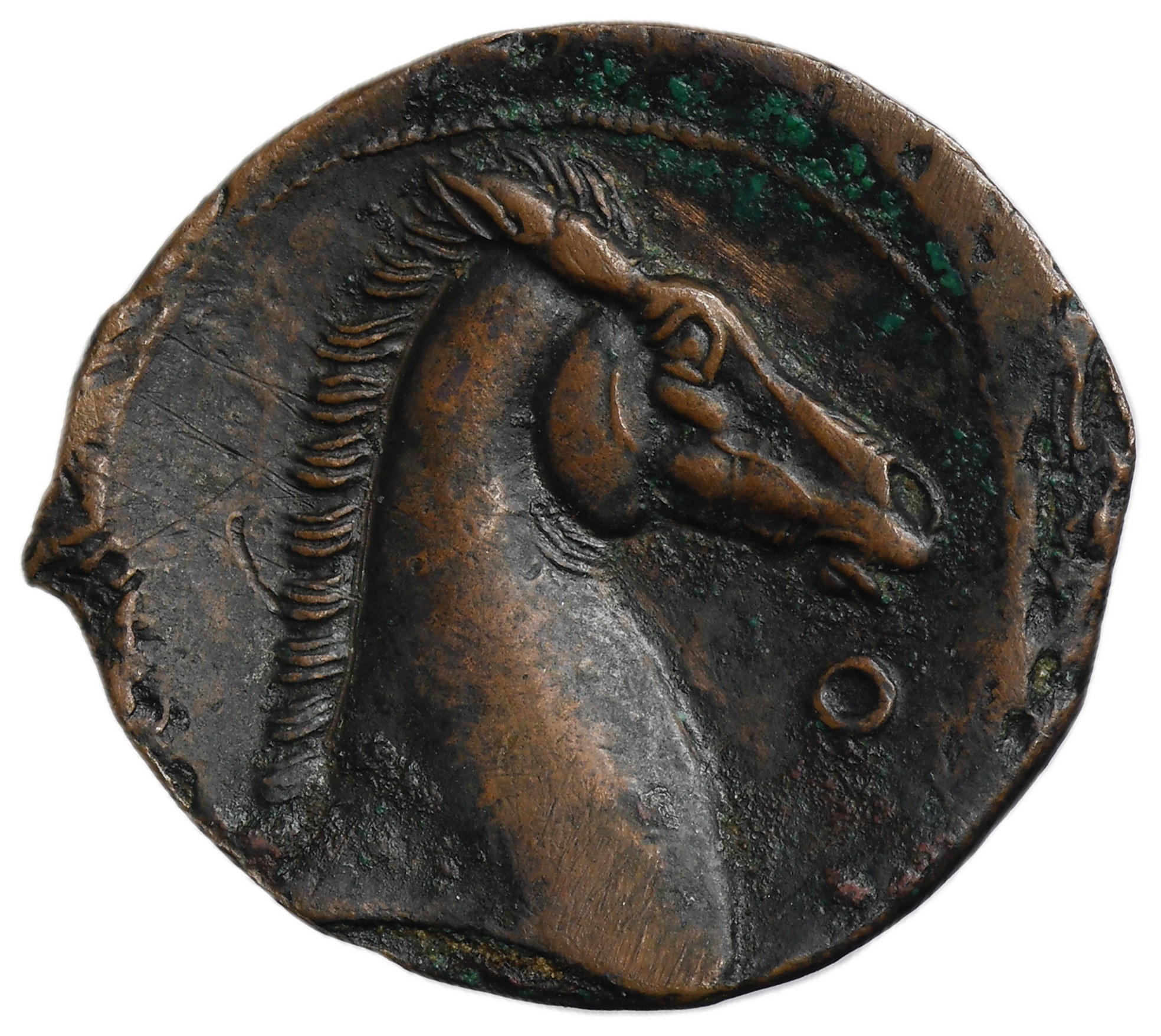
This coin is illustrated in Oliver D. Hoover’s catalogue HGC 2, 1671.
This bronze belongs to the characteristic coinage of Punic Sardinia, an island that had been within the Carthaginian sphere of influence since the 6th century BC. The type featuring the head of Tanit and a horse’s head is dated to c. 300–264 BC and is attributed to a Punic mint in Sardinia, although the precise place of issue remains uncertain.
The obverse depicts the head of Tanit facing left. Tanit was one of the principal deities of the Carthaginian pantheon and occupied a particularly important position in Punic religion. Her image became one of the most distinctive motifs of Carthaginian coinage and of issues struck in territories under Punic control.
The reverse bears the head of a horse facing right, another of the most recognizable symbols of Carthaginian numismatic iconography. The horse appears on Punic coins in numerous forms, either as a complete figure or simply as a head, and was employed both at Carthage itself and throughout territories under its influence in the western Mediterranean.
The issue belongs to the period immediately preceding the First Punic War (264–241 BC), when Carthage remained the dominant maritime power in the western Mediterranean. Sardinia constituted an important element of its strategic and economic system, and its Punic coinage provides tangible evidence of the enduring Carthaginian presence on the island.
Of particular importance is the distinguished provenance, including three renowned numismatic auction houses.
Ex. CNG Electronic, Auction 242, 2010, Lot 23.
Ex. NAC, Auction 120, 2020, Lot 334.
Ex. Fritz Rudolf Künker, Auction 402, Lot 597.
Greece
Zeugitana, Sardinia, AE 300-264 BC, Punier mint
Obverse: head of Tanit left
Reverse: head of hors right
Diameter 20 mm, weight 6.37 g











