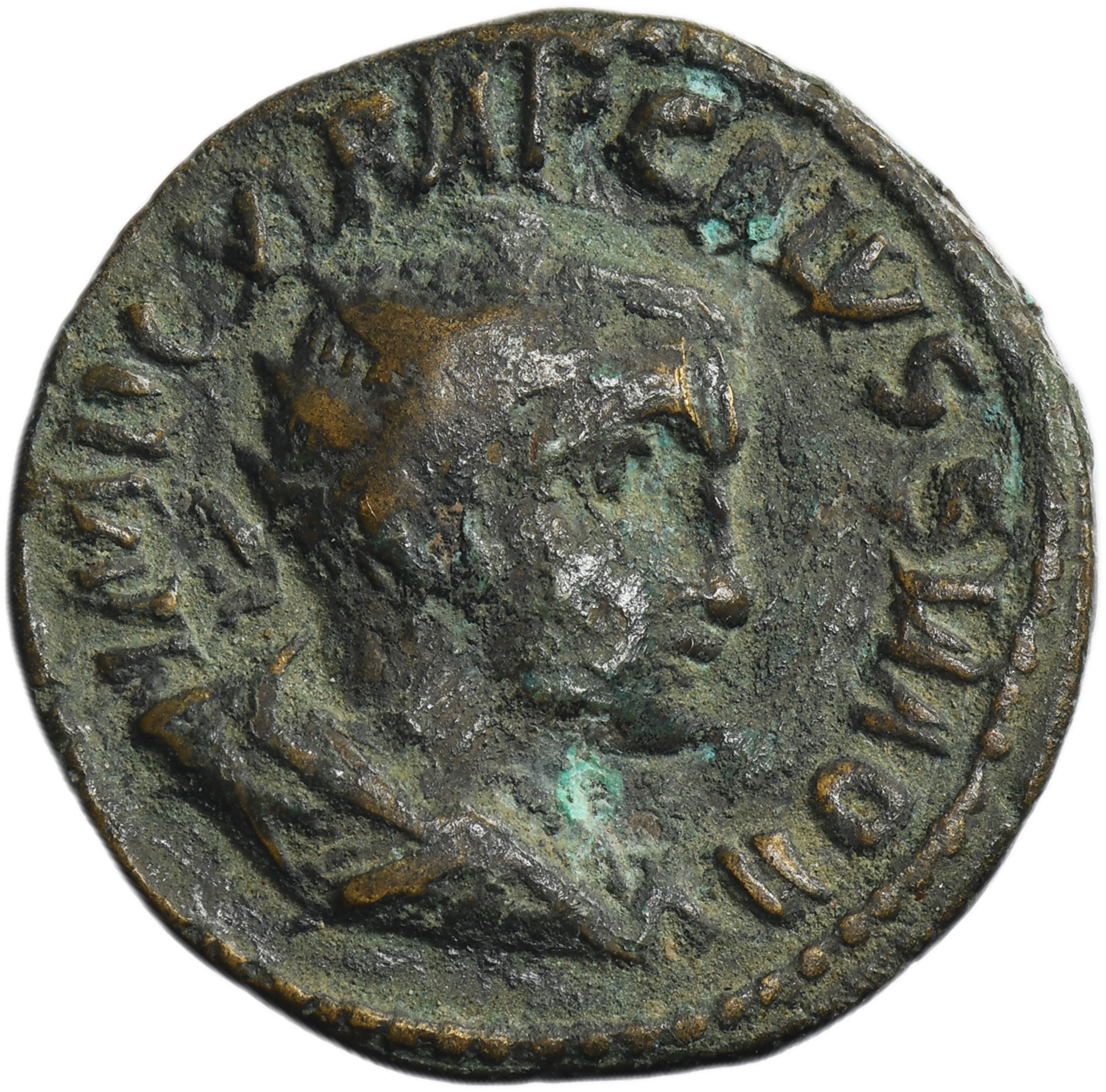
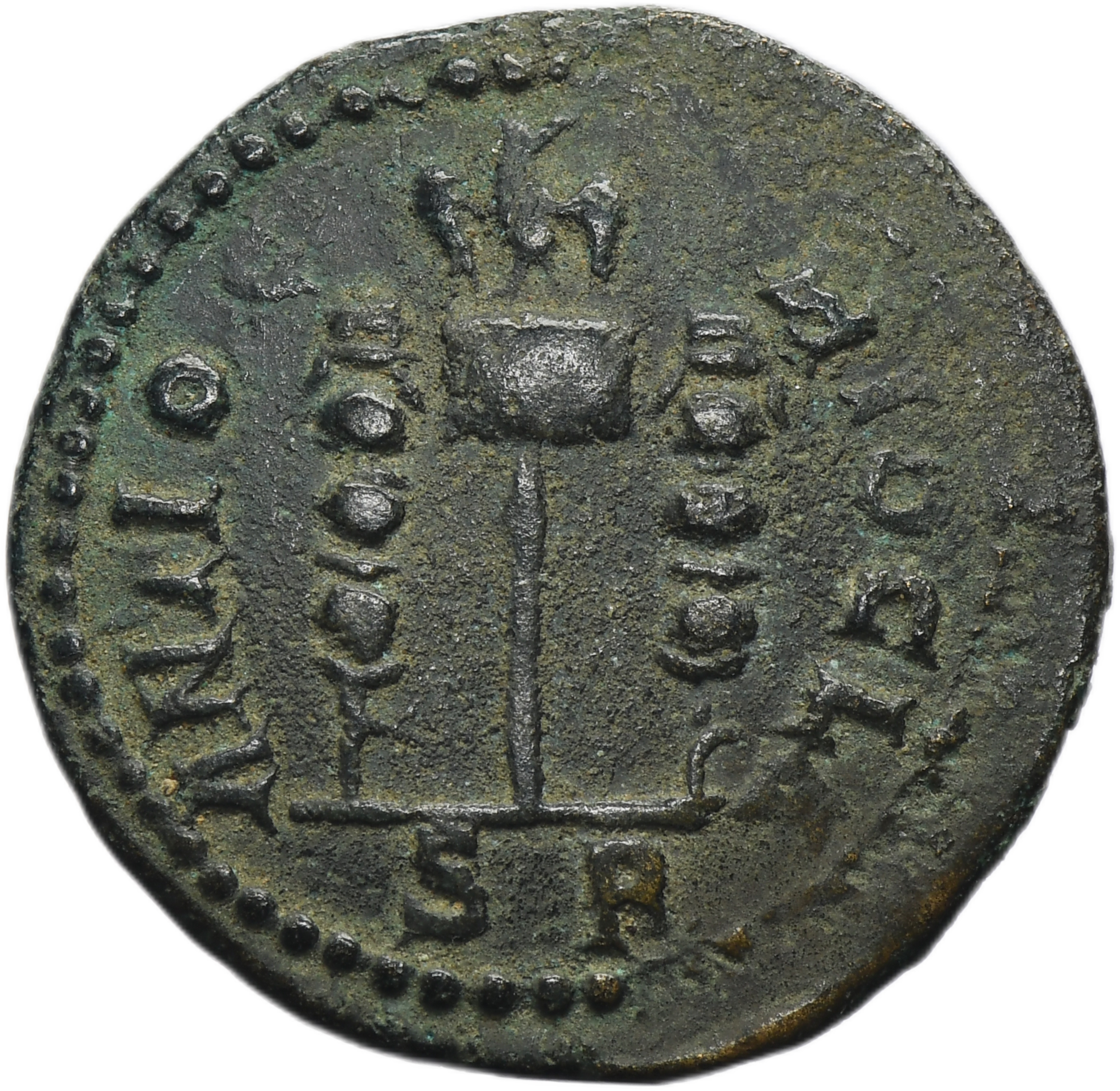


Provincial bronze issue of Volusianus (AD 251–253), son and co-ruler of Trebonianus Gallus, struck at Antioch in Pisidia, belongs to the civic coinage of Asia Minor, where strong military iconography reflects the realities of the mid-3rd century crisis.
The obverse presents a radiate, draped and cuirassed bust of the emperor facing right, with the legend IMP C V IMP GALVSSIANO AVG, identifying him as imperator and augustus. The radiate crown, although not strictly tied to denomination in provincial issues, remains a clear symbol of imperial authority.
The reverse depicts a legionary eagle set between two military standards, with SR in the exergue. This composition belongs to a distinctly military iconographic repertoire, directly referencing the army as the foundation of imperial power. The eagle (aquila) was the principal emblem of the Roman legions, symbolizing their honor and continuity, while the standards (signa) emphasize military organization and identity.
The combination of these elements creates a clear propagandistic message, highlighting the loyalty of the army and the emperor’s reliance on military support. In the case of Volusianus, whose reign coincided with external threats and internal instability, such imagery carried particular ideological weight.
Roman Provincial
Pisidia, Antioch, Volusian (251–253), AE
Obverse: laureate, draped and cuirassed bust right
IMP C V IMP GALVSSIANO AVG
Reverse: vexilium between two standards, SR exergue
ANTIOC - HIO CLA
Diameter 22 mm, weight 7.16 g











