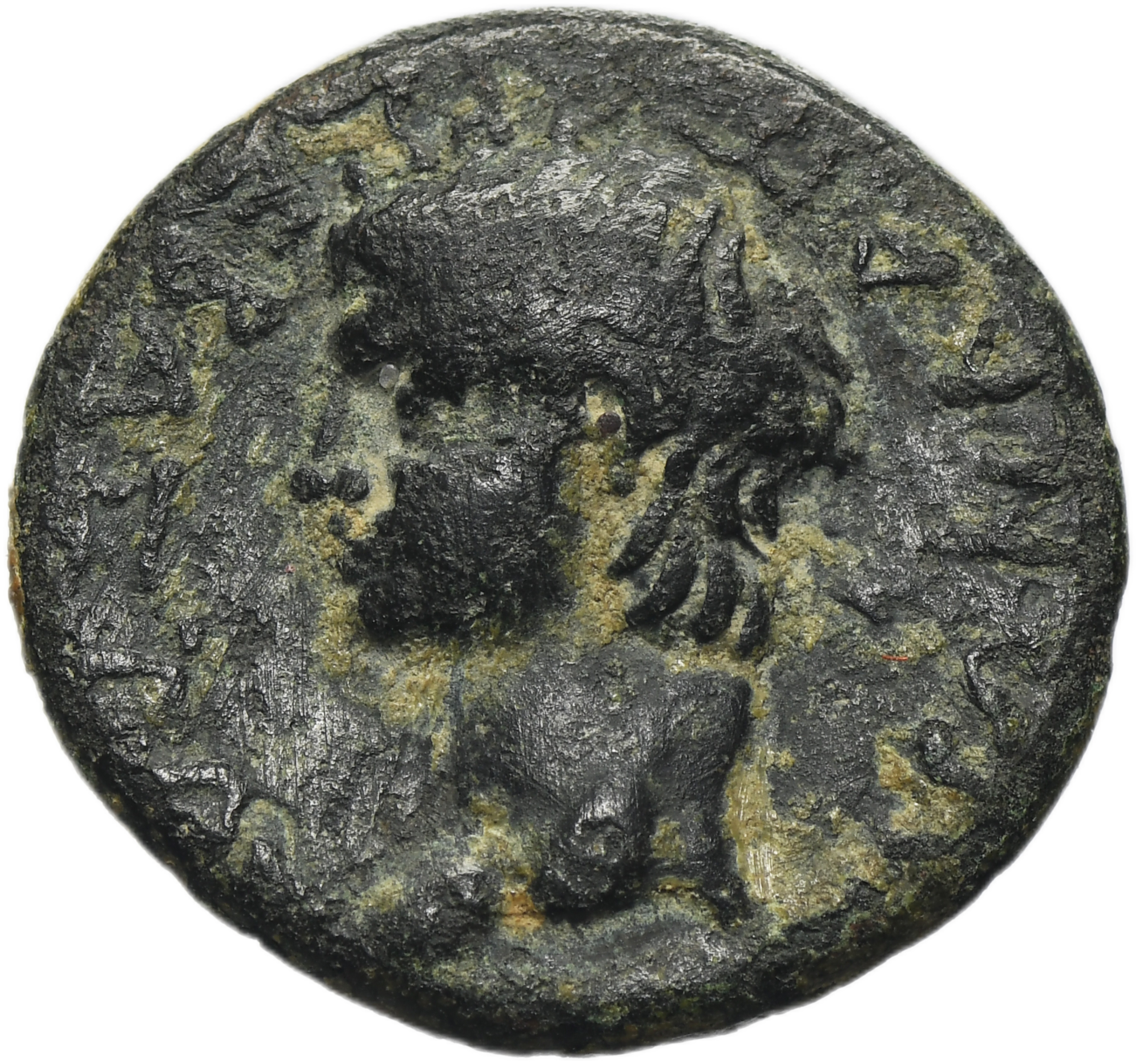
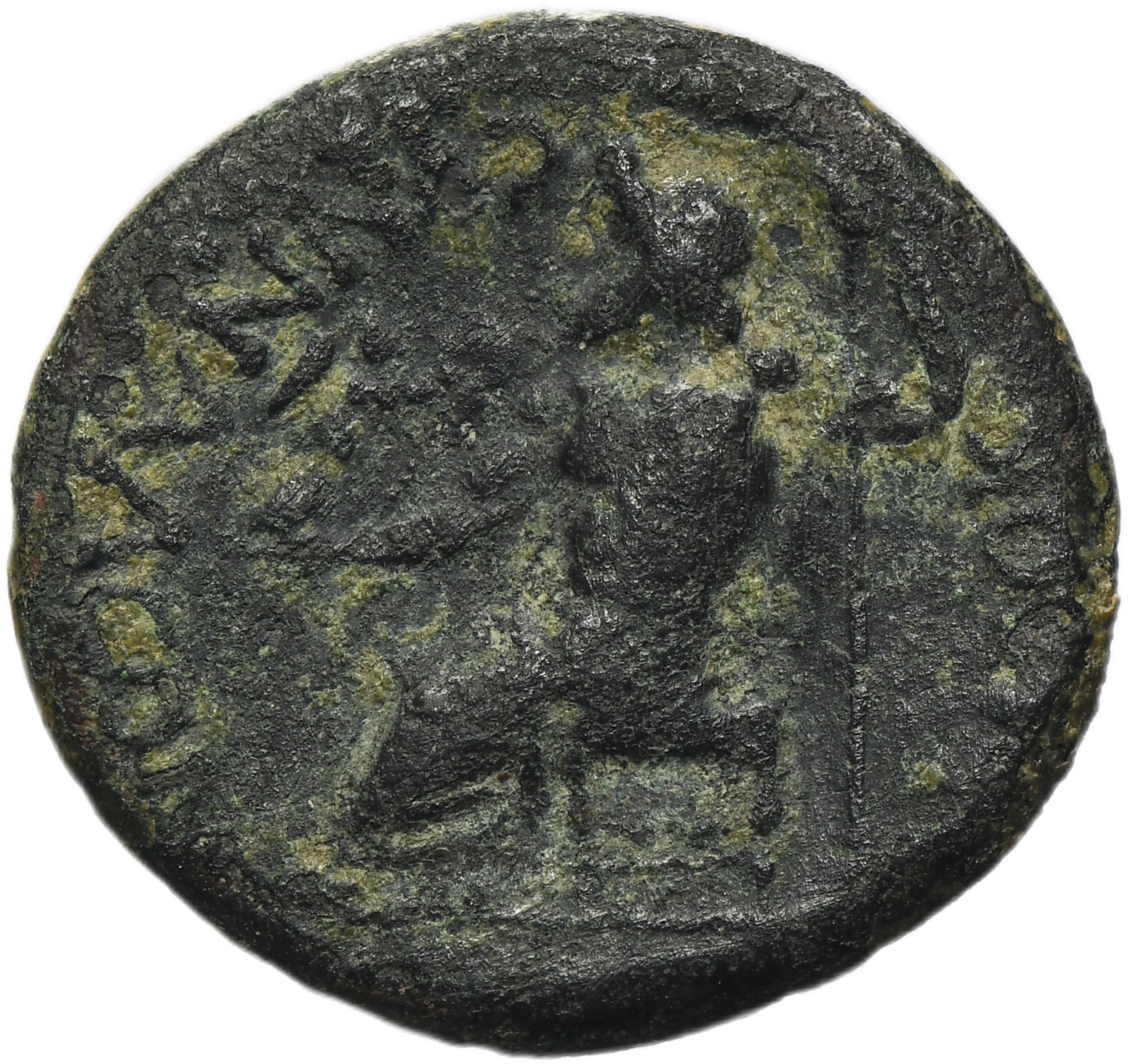


Provincial bronze issue of Nero (AD 54–68), struck at Synnada in Phrygia, belongs to the civic coinage of Asia Minor produced within the framework of the early Roman Empire. Synnada was an important administrative center of the region, well known in antiquity for the exploitation of Phrygian marble (marmor Synnadicum), as attested in ancient literary sources.
The obverse presents a head of the emperor facing left with the Greek legend ΝΕΡΩΝ ΚΑΙΣΑΡ ΣΕΒΑΣΤΟΣ, identifying Nero as Caesar and Augustus. The expanded titulature corresponds to issues from the more developed phase of his reign, when imperial representation in provincial coinage followed established and standardized formulas.
The reverse depicts Zeus seated left, holding a figure of Nike and a scepter, accompanied by the legend TI K ΠIΣΩN ΦIΛOK ΣYNNAΔEΩN. This inscription records the name of the magistrate responsible for the issue, Tiberius Claudius Piso Philokles, a feature characteristic of provincial coinage, where local officials were frequently named on the coins. Such references provide valuable evidence for the administrative organization of cities and their integration within the Roman imperial system.
The representation of Zeus with Nike and scepter follows a classical Greek iconographic type, emphasizing divine authority and victory. Within the context of Synnada’s coinage, it reflects the combination of local religious traditions with imperial imagery, forming a coherent visual program typical of eastern provincial mints.
Roman Provincial
Phrygia, Docimeum, Nero (54-68), AE ca. 55
Obverse: head of Nero left
ΝΕΡΩΝ ΚΑΙΣΑΡ ΣΕΒΑΣΤΟΣ
Reverse: Zeus seated left, holding Nike and sceptre
TI K ΠIΣΩN ΦIΛOK ΣYNNAΔEΩN
Diameter 19 mm, weight 3.92 g











