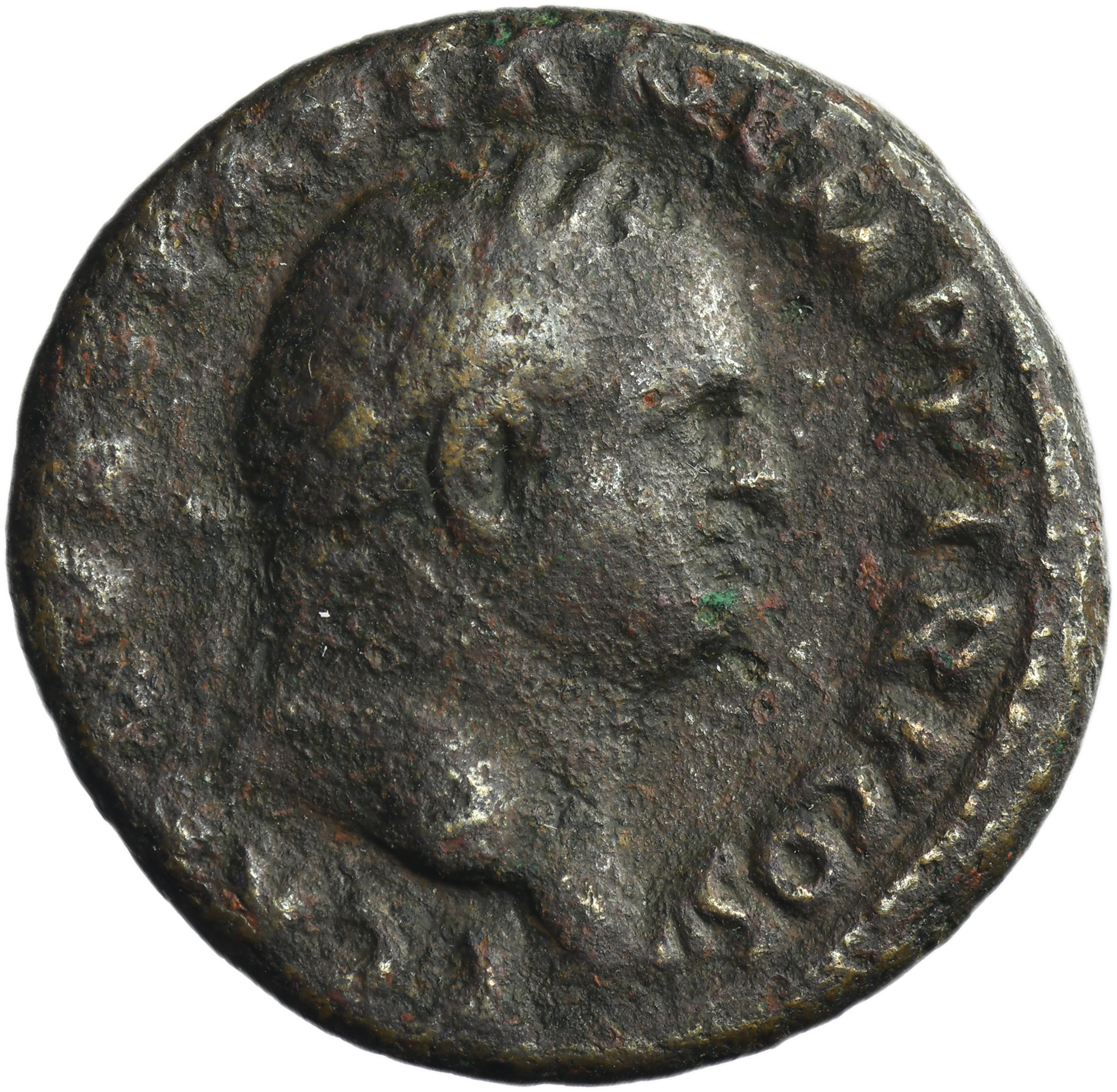
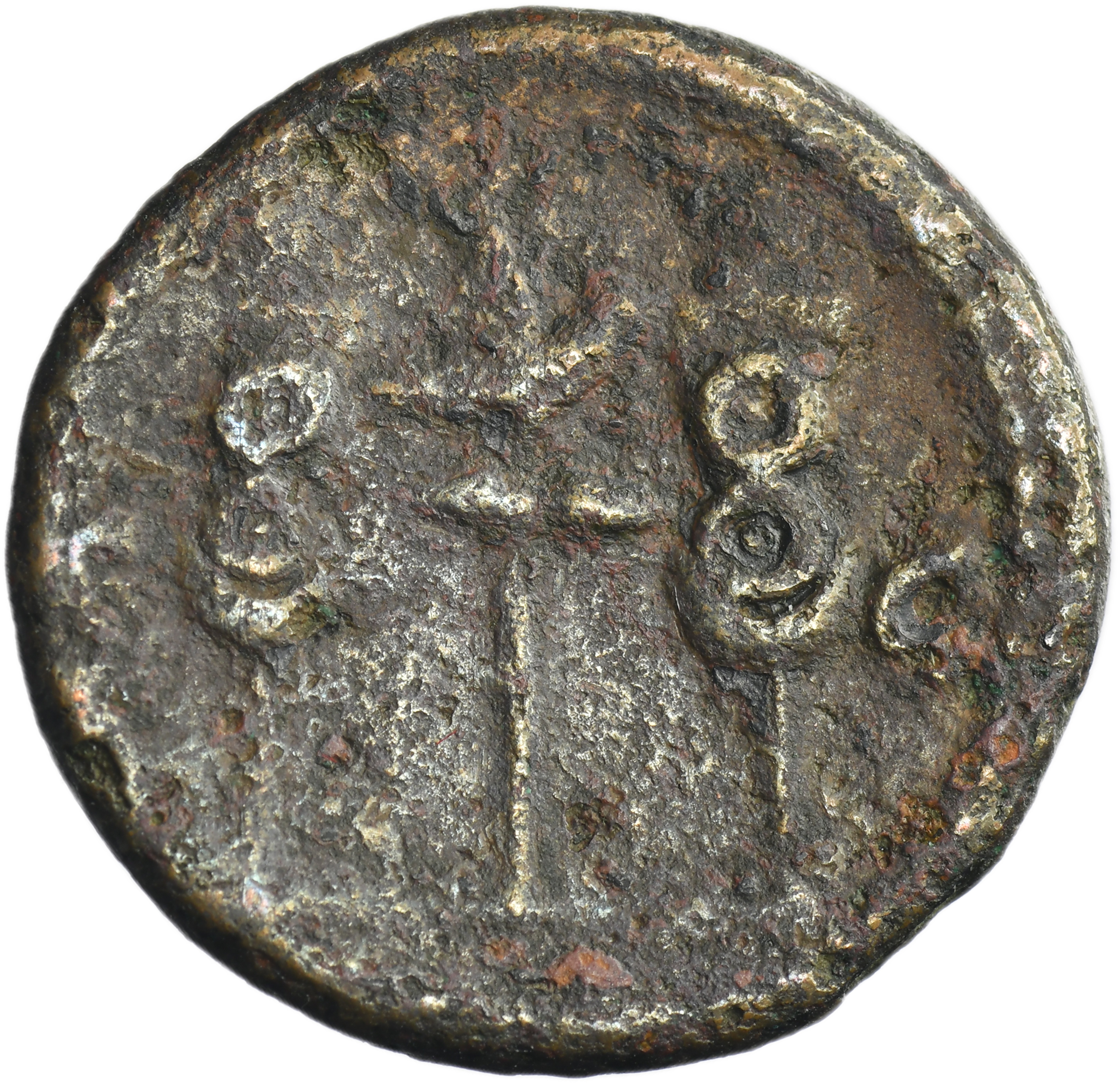


Bronze as of Titus as Caesar, struck at the Rome mint in AD 72, belongs to issues produced during his joint rule with Vespasian, when Titus acted as the designated heir and an active in imperial authority. Coins of this type form an important part of Flavian dynastic propaganda, emphasizing continuity of rule and the role of Titus as future emperor.
The obverse features a laureate head of Titus facing right with the legend T CAES VESPASIAN IMP P TR P COS II, reflecting his titulature as Caesar and explicitly linking him to Vespasian. The designation COS II (second consulship) allows the issue to be dated to AD 72, shortly after the conclusion of the main phase of the Jewish War.
The reverse depicts a legionary eagle (aquila) set between two standards (signa), with S C in the fields, indicating senatorial authorization for the bronze issue. The aquila was the central emblem of the Roman legion, closely associated with its honor and identity, while its combination with standards reinforces the prominence of the army as the foundation of imperial power.
This type is directly connected to the military context of the early Flavian period and belongs to a broader group of issues celebrating the victories of the Jewish War (AD 66–73), in which Titus played a decisive role as commander. The use of such military iconography reflects the importance of the army in legitimizing the newly established Flavian dynasty.
Roman Imperial
Titus as Caesar (69-79), As 72, Rome mint
Obverse: laureate head right
T CAES VESPASIAN IMP P TR P COS II
Reverse: aquila between two standards, S-C across the fields
Diameter 26 mm, weight 10.91 g











