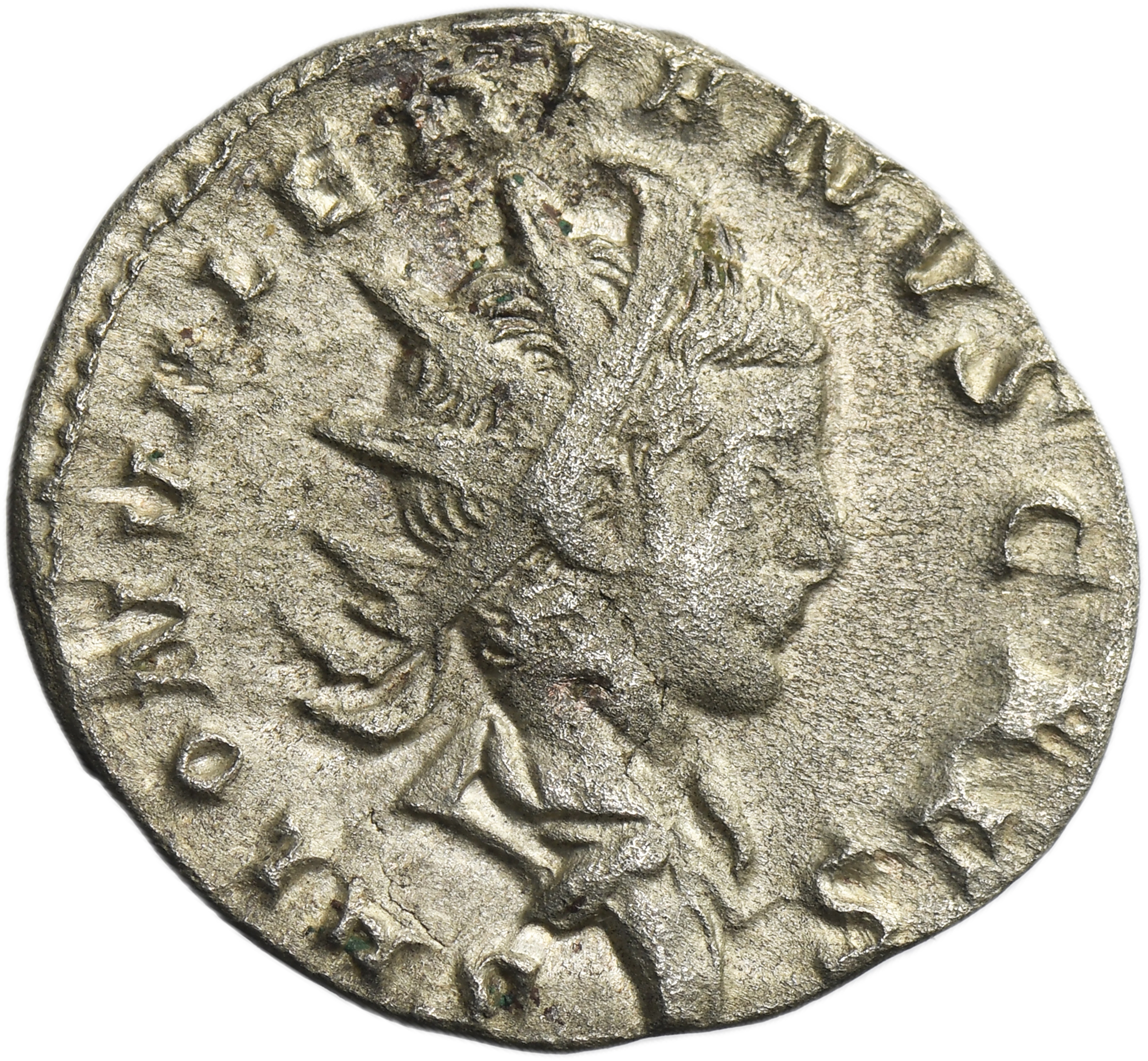
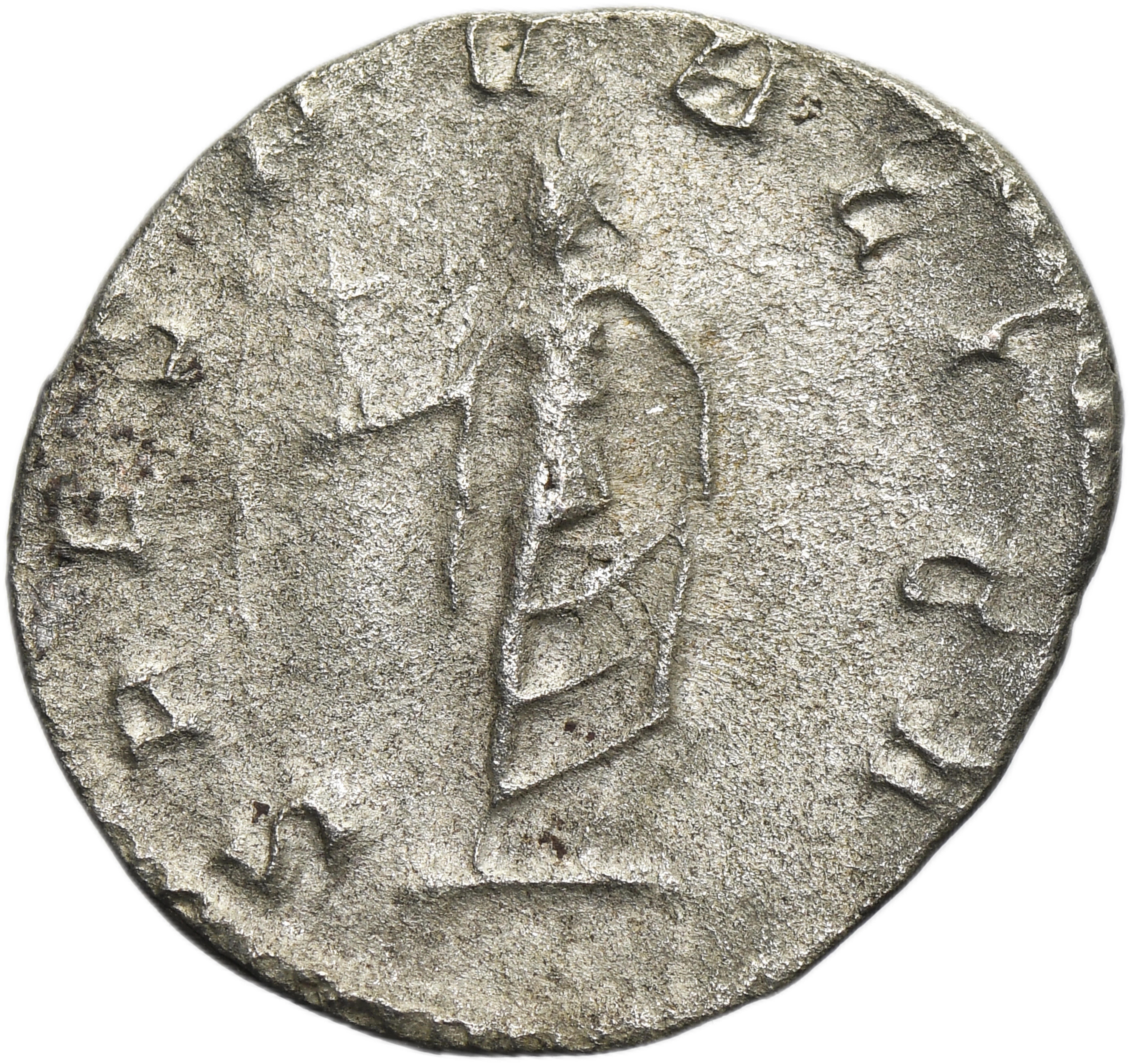


Very rare antoninianus of Saloninus (AD 258–260 as Caesar), struck at Colonia Agrippinensis between AD 258–259, belonging to a short and clearly defined emission issued after the death of his brother Valerian II, when Saloninus was elevated as heir to the throne.
The obverse shows a radiate bust of the young Caesar facing right, with the legend SALON VALERIANVS CAES, explicitly identifying him as a member of the ruling dynasty and designated successor. The radiate crown denotes the antoninianus denomination, standard for this period.
The reverse depicts Spes advancing left, holding a flower and lifting her garment, with the legend SPES PVBLICA. Spes, as the personification of hope, was a key element of imperial propaganda, particularly in relation to young heirs. Her presence on the coin serves as a direct ideological message, presenting Saloninus as the future of the empire and guarantor of its renewal.
The legend SPES PVBLICA (“public hope”) belongs to a well-established formula in Roman coinage, used to emphasize the role of a Caesar as the promise of continuity and stability. This type is widely attested among issues of imperial heirs, confirming its consistent propagandistic function.
A noteworthy, well-documented aspect of Saloninus’ coinage is its limited duration: emissions from Cologne are confined to a brief period prior to his death in AD 260, which directly contributes to their relative rarity in the numismatic record.
Roman Imperial
Saloninus (258-260), Antoninianus 258-259, Colonia Agrippinensis mint
Obverse: radiate and draped bust to right
SALON VALERIANVS CAES
Reverse: Spes advancing left, lifting dress and holding flower
SPES PVBLICA
Diameter 22 weight 2.80 g











