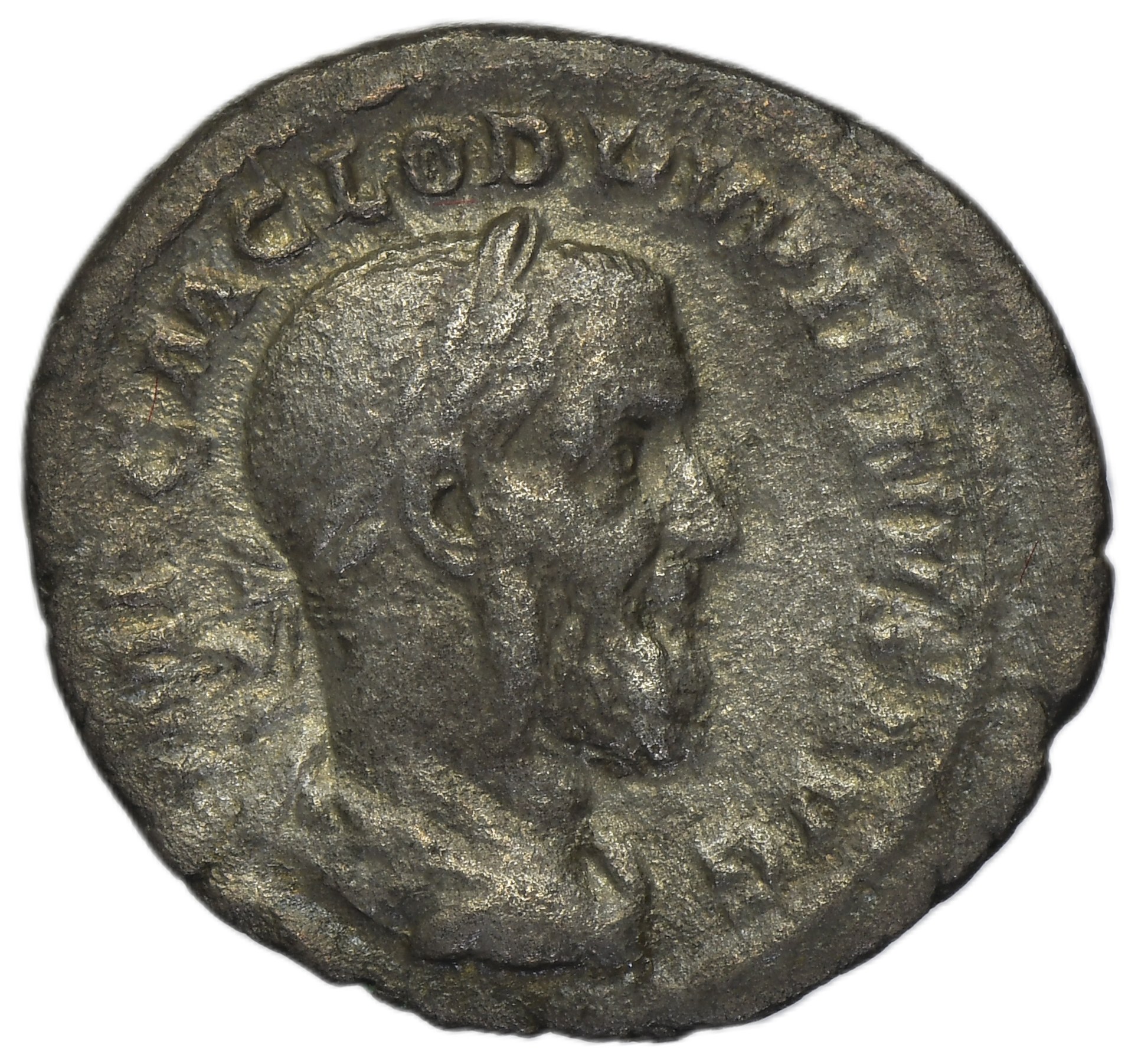
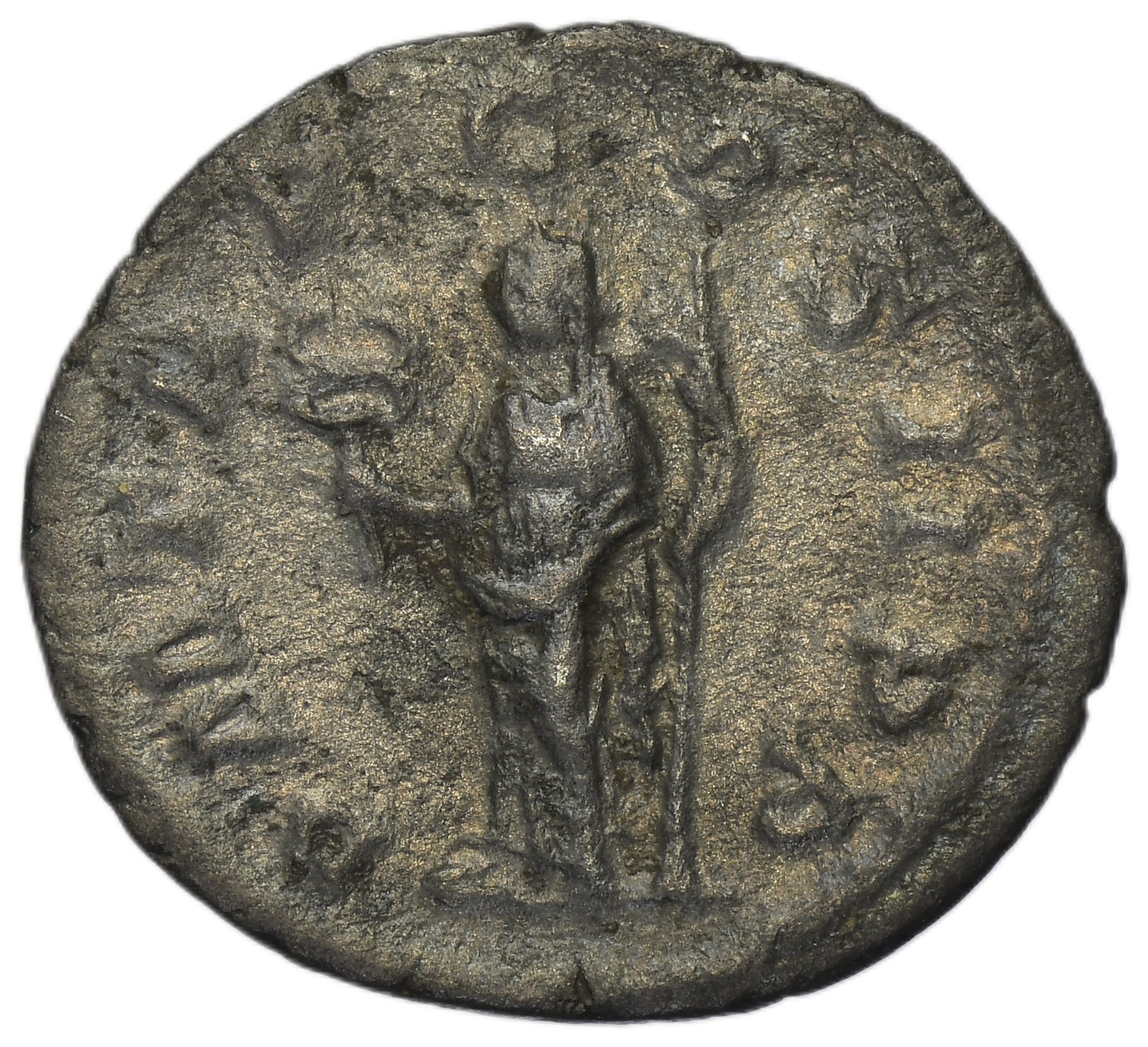


A very rare antoninianus of Pupienus, an emperor who reigned for only approximately three months during the turbulent Year of the Six Emperors.
Marcus Clodius Pupienus Maximus was an experienced military commander and senior state official. In AD 238, following the deaths of Gordian I and Gordian II, the Senate elevated him to the imperial throne jointly with Balbinus. Pupienus was tasked with organising the defence of Italy against the forces of Maximinus Thrax. Before a decisive confrontation could take place, Maximinus was murdered by his own soldiers during the siege of Aquileia.
After Pupienus returned to Rome, relations between the joint emperors rapidly deteriorated into open distrust. The Praetorian Guard exploited their rivalry, storming the palace, seizing both rulers and murdering them. The young Gordian III subsequently became sole emperor.
The reverse depicts Felicitas, the Roman personification of happiness, prosperity and the well-being of the state. She holds a caduceus and a long sceptre. The image was intended to herald the restoration of peace and prosperity following the overthrow of Maximinus Thrax. In view of the violent end to Pupienus’ reign, the propagandistic message of this scene carries a particularly poignant significance.
An example with a legible imperial portrait and an identifiable depiction of Felicitas. The surfaces display evidence of extensive circulation.
A very rare antoninianus of one of Rome’s shortest-reigning emperors and an interesting witness to the political crisis and struggle for power during the Year of the Six Emperors.
Roman Imperial
Pupienus (238), Antoninianus 238, Rome mint
Obverse: laureate, draped, cuirassed bust right
IMP C M CLOD PVPIENVS AVG
Reverse: Felicitas standing left, holding caduceus and sceptre
P M TR P COS II P P
Diameter 20 mm, weight 2.57 g











