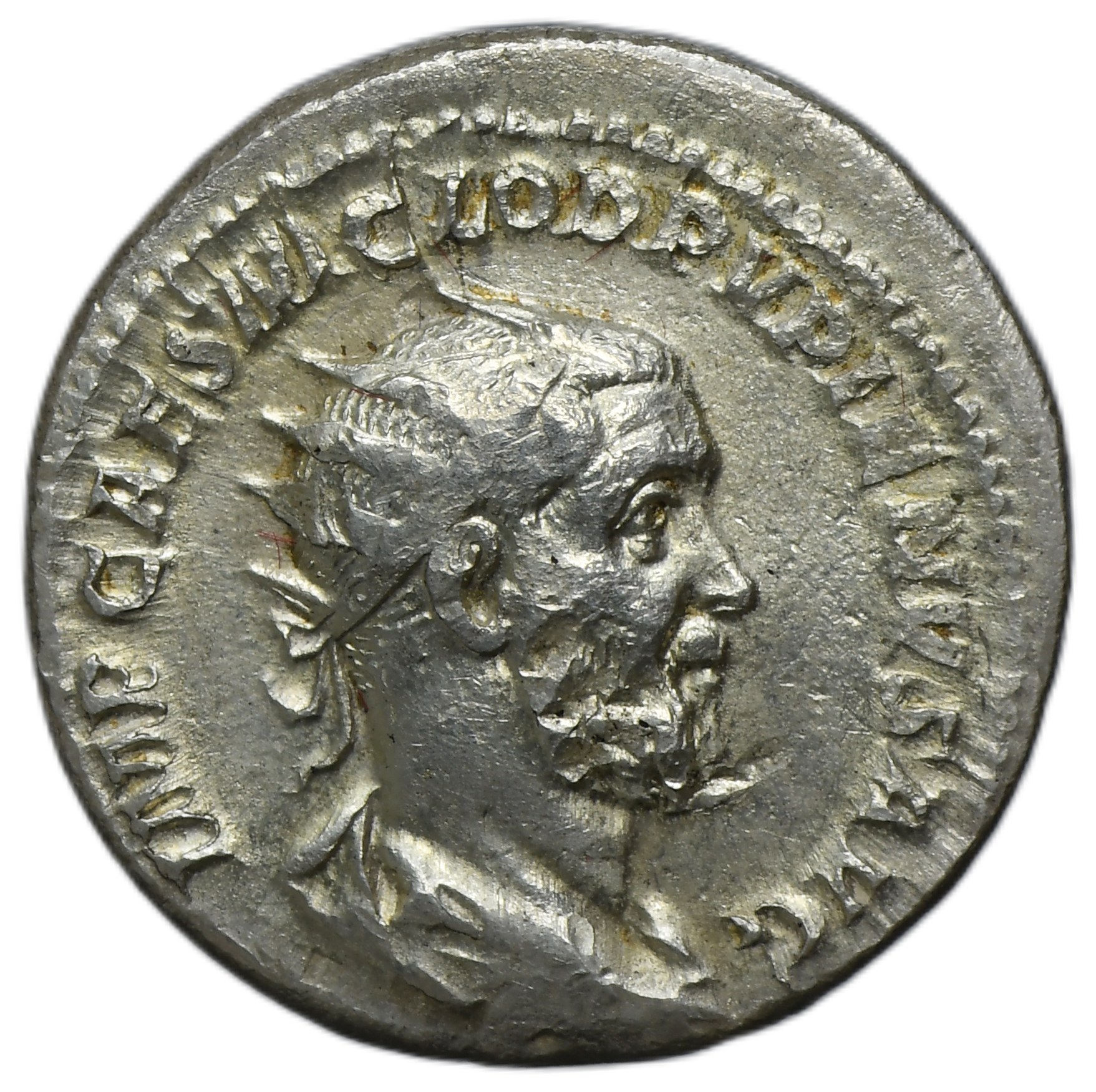


A rare and interesting antoninian of Pupienus, struck during the emperor’s exceptionally brief reign in the turbulent Year of the Six Emperors, AD 238.
Pupienus was elevated to the imperial throne alongside Balbinus by the Senate in April AD 238, during the revolt against Maximinus Thrax. The two emperors were intended to provide a senatorial alternative to a ruler regarded as a usurper and tyrant. Their joint reign, however, lasted only about three months. Following the death of Maximinus, tensions between the co-emperors and their unpopularity among the Praetorian Guard ultimately led to the murder of both Pupienus and Balbinus, after which the young Gordian III became sole emperor.
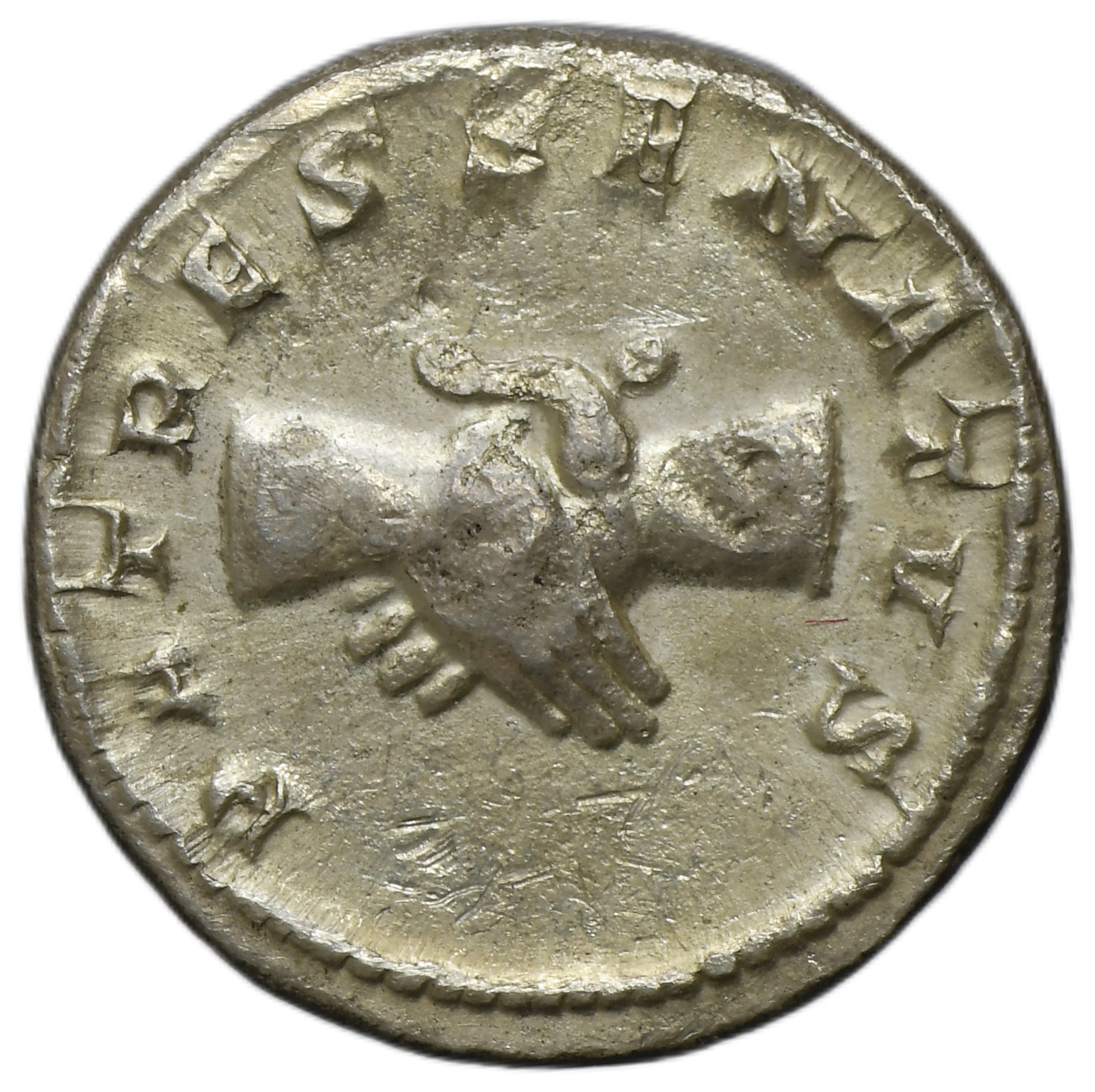
Particularly interesting is the reverse depicting two clasped hands, a traditional Roman symbol of concordia, harmony and unity. The accompanying legend PATRES SENATVS, referring to the “Fathers of the Senate”, emphasizes the distinctly senatorial character of Pupienus’ authority. Unlike many conventional imperial reverse types, the design refers neither to a deity nor to military victory, but directly emphasizes the emperor’s relationship with the Senate, to which he owed his elevation to the throne.
This type provides a fascinating testimony to one of the most chaotic episodes of the Crisis of the Third Century. The coinage of Pupienus also represents a tangible record of a reign that lasted only a few months, making his issues particularly desirable among collectors of Roman Imperial coinage.
A rare antoninian of Pupienus featuring clasped hands and the legend PATRES SENATVS, a remarkably direct reference to the senatorial foundations of his imperial authority. An interesting testimony to one of the shortest reigns in the history of the Roman Empire.
Roman Imperial
Pupienus (238), Antoninianus 238, Rome mint
Obverse: radiate, draped, cuirassed bust right
IMP CAES M CLOD PVPIENVS AVG
Reverse: clasped right hands
PATRES SENATVS
Diameter 21 mm, weight 4.91 g











