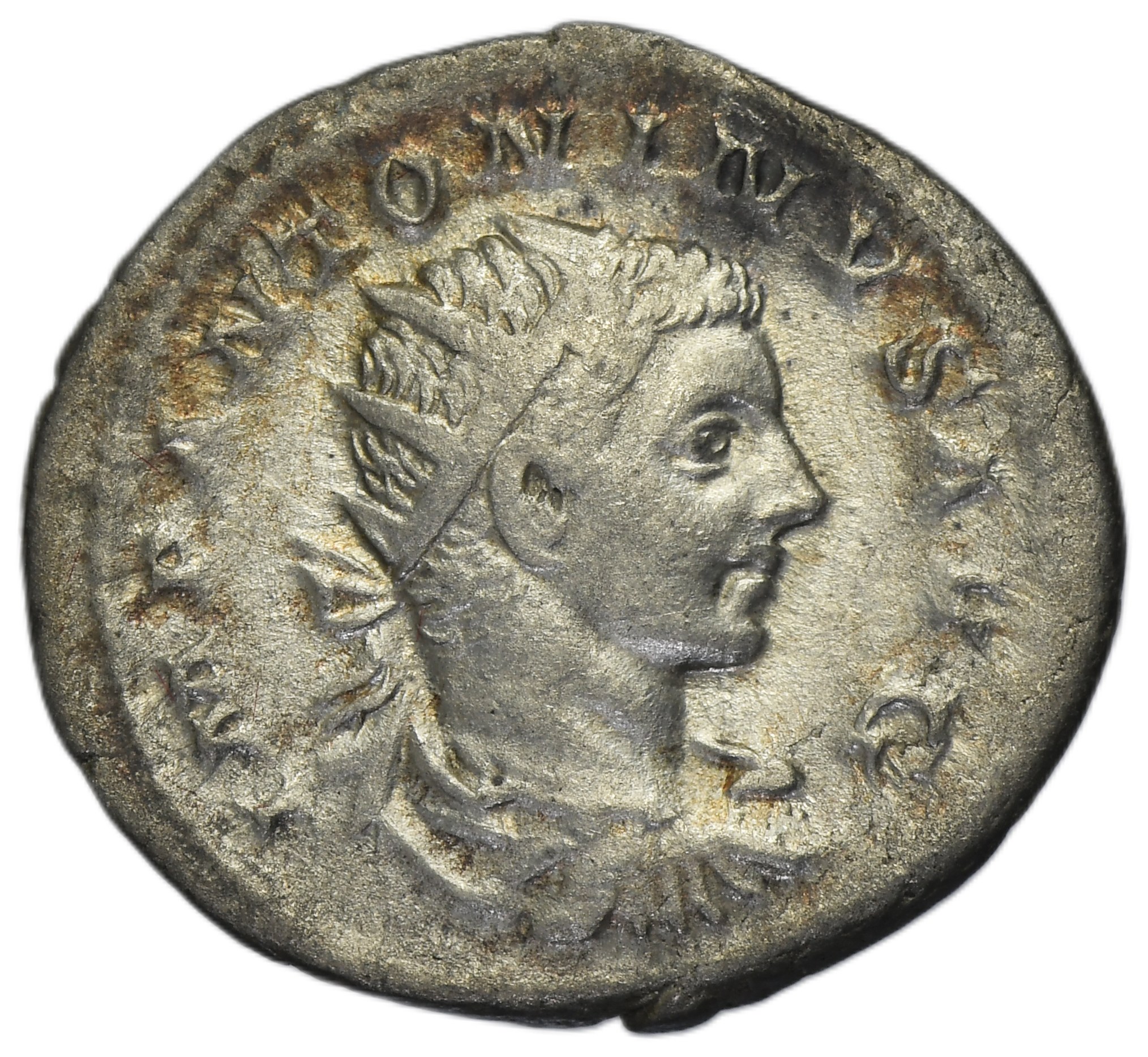
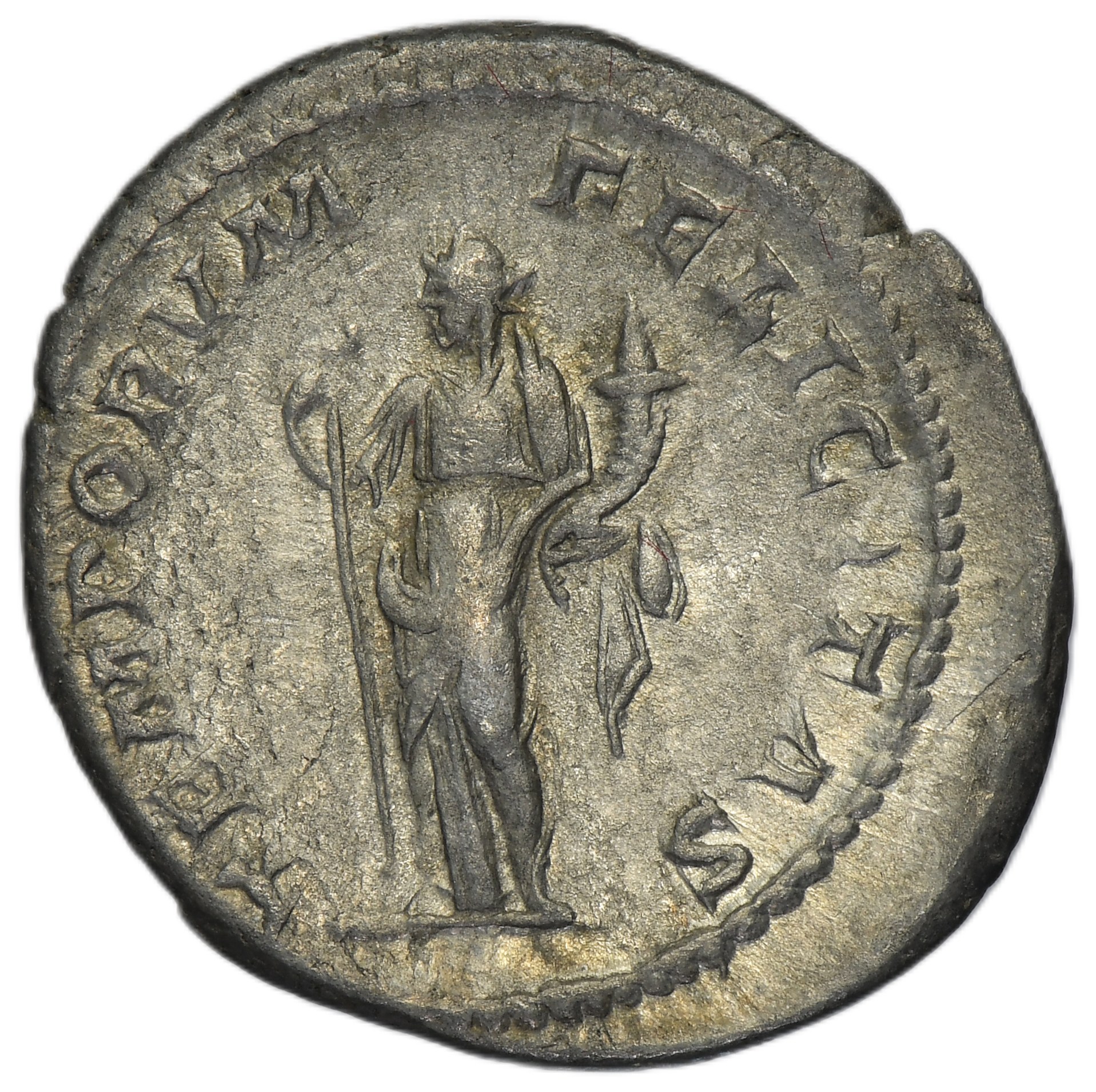


An antoninian of Elagabalus featuring the personification of Felicitas on the reverse, referring to prosperity and happy times under the emperor’s rule.
Elagabalus came to power in AD 218 following the overthrow of Macrinus. The young ruler originated from Emesa in Syria, where he had served as priest of the god Elagabal. Upon ascending the throne, he adopted the name Marcus Aurelius Antoninus, invoking Caracalla and emphasizing his connection with the Severan dynasty. His brief reign of only four years became one of the most extraordinary episodes in the history of the Roman Empire.
The antoninianus, introduced by Caracalla around AD 215, was still a relatively new denomination during the reign of Elagabalus. Its characteristic feature was the radiate crown worn by the emperor, distinguishing the antoninianus from the denarius.
The reverse depicts Felicitas, the Roman personification of happiness, prosperity and good fortune. She holds a long caduceus and a cornucopia, symbols of peace, abundance and prosperity. The legend TEMPORVM FELICITAS, “Prosperity of the Times”, expressed the idea of a fortunate age secured for the state by the emperor’s rule. Such a message was particularly significant at the beginning of a new reign, promoting an image of stability and prosperity following a period of struggle for the imperial throne.
An antoninian of Elagabalus featuring Felicitas, an excellent example of the imagery of prosperity and well-being employed in the coinage of the young representative of the Severan dynasty.
Roman Imperial
Elagabalus (218–222), Antoninianus 218-22, Rome mint
Obverse: radiate, draped and cuirassed bust right
IMP CAES ANTONINVS AVG
Reverse: Felicitas standing left, holding long caduceus and cornucopiae
TEMPORVM FELICITAS
Diameter 24 mm, weight 4.94 g











