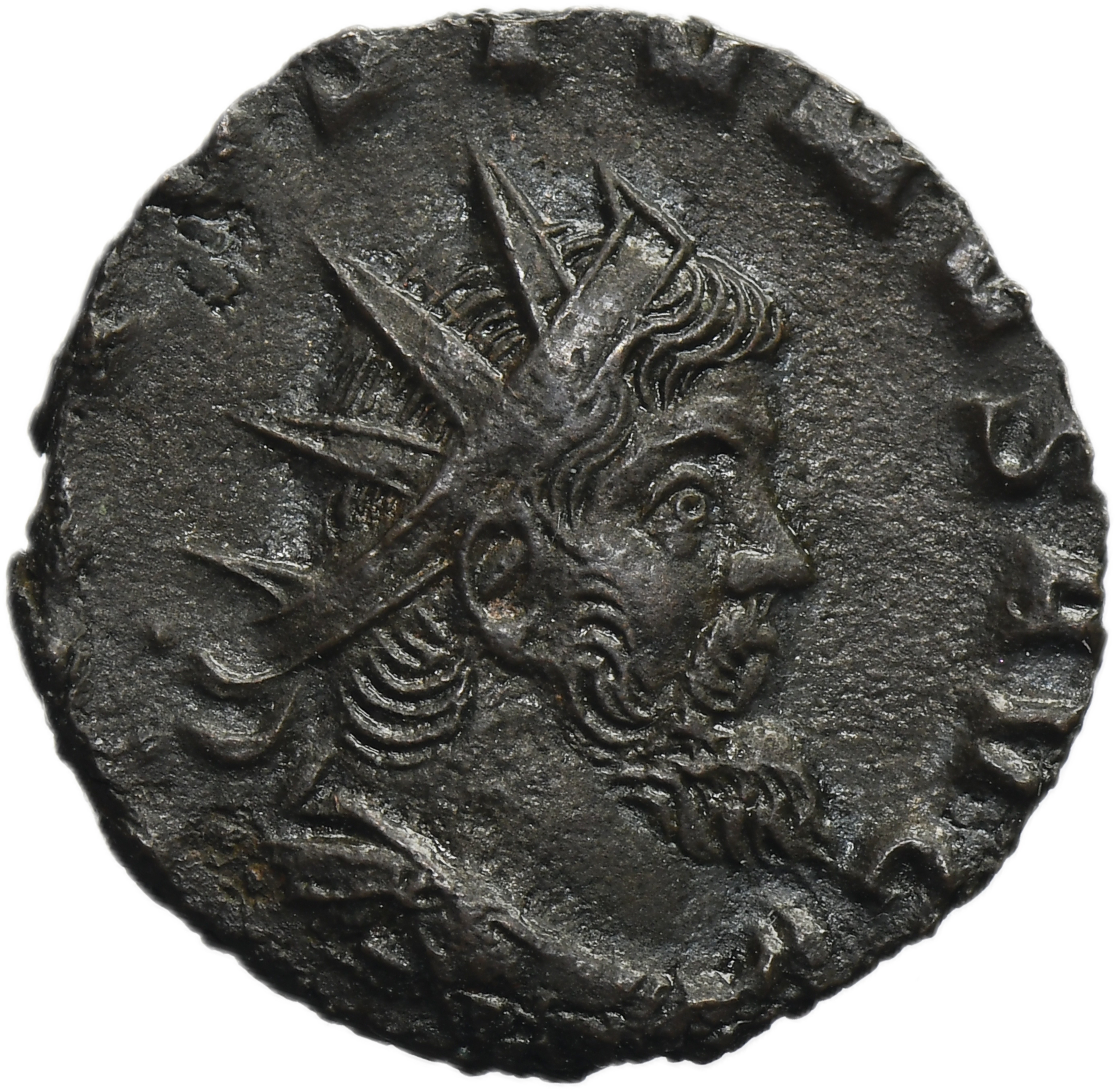
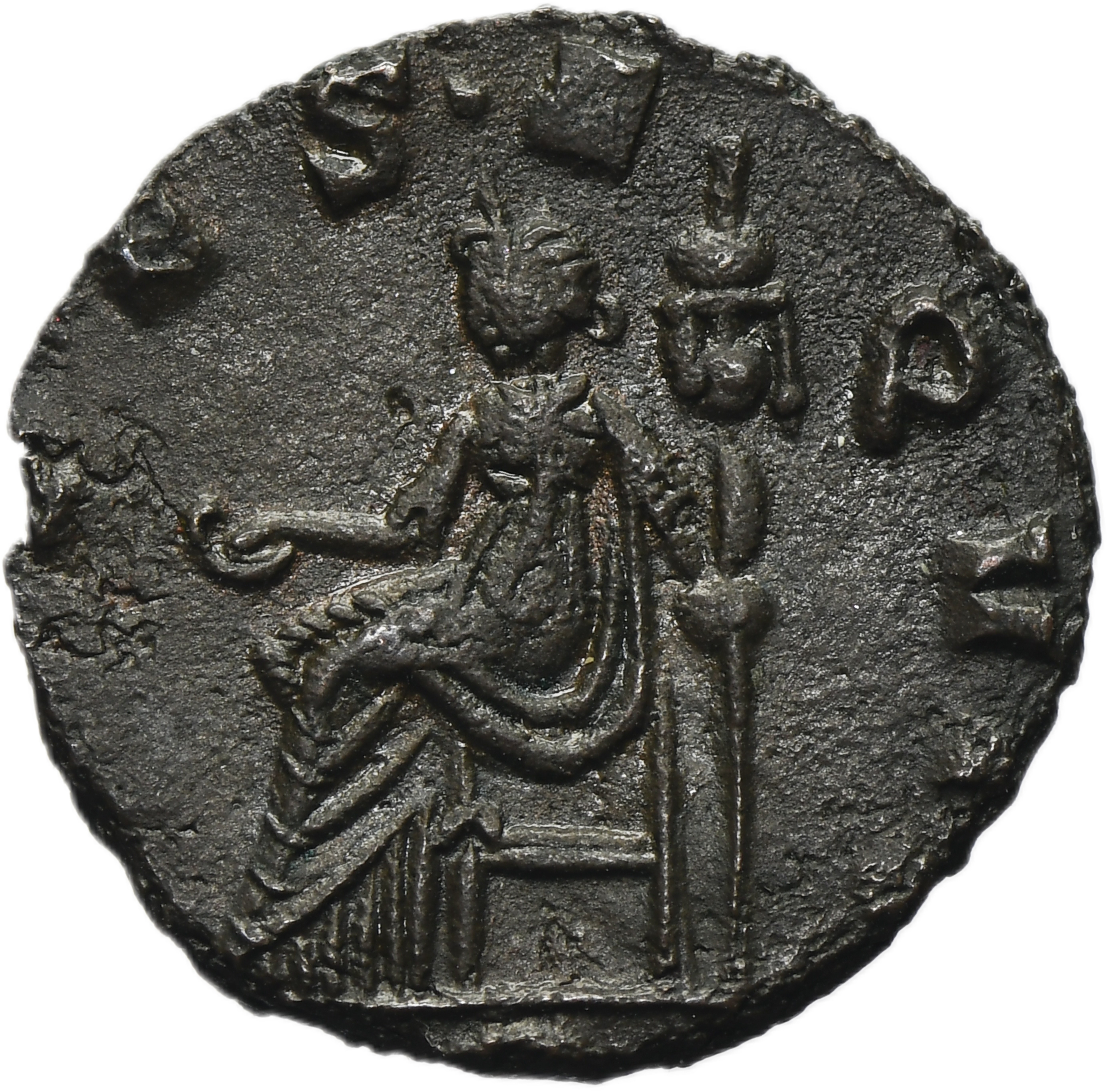


Rare antoninianus of Aureolus (usurper AD 267–268), struck at the mint of Mediolanum, belongs to a highly distinctive series of issues associated with Aureolus’ revolt against Gallienus. These coins were produced in a specific political context, when Aureolus, commander of the cavalry (magister equitum), aligned himself with Postumus and adopted his name on the coinage.
The obverse presents a radiate, draped and cuirassed bust facing right, with the legend IMP POSTVMVS AVG. The use of Postumus’ name instead of his own is an exceptional phenomenon in Roman numismatics and is well attested as a deliberate political statement. Aureolus did not formally proclaim himself emperor but acted in the name of the Gallic ruler, seeking to strengthen his position against Gallienus.
The reverse depicts Fides seated left, holding a patera and military standard, with the legend FIDES EQVIT. Fides, as the personification of loyalty and trust, here refers specifically to the cavalry (equites), which formed the core of Aureolus’ military power. The standard symbolizes military units, while the patera reflects the ritual aspect of oath-taking and allegiance.
The legend FIDES EQVIT (“the loyalty of the cavalry”) represents one of the most characteristic propagandistic formulas associated with Aureolus and his military base. These issues emphasize the allegiance of mounted troops to their commander, a crucial factor in the political realities of the 3rd century, when military support determined the rise and fall of rulers.
A noteworthy, well-documented feature is that the Mediolanum issues of Aureolus constitute a unique case in Roman history in which a usurper struck coins in the name of another contemporary ruler (Postumus), making them particularly significant from both a historical and numismatic perspective.
Roman Imperial
Aureolus (Usurper 267-268), Antoninianus 267-268, Milan mint
Obverse: radiate, draped and cuirassed bust of Postumus right
IMP POSTVMVS AVG
Obverse: Fides seated left holding patera and standard
FIDES EQVIT
Diameter 18 mm, weight 2.45 g











