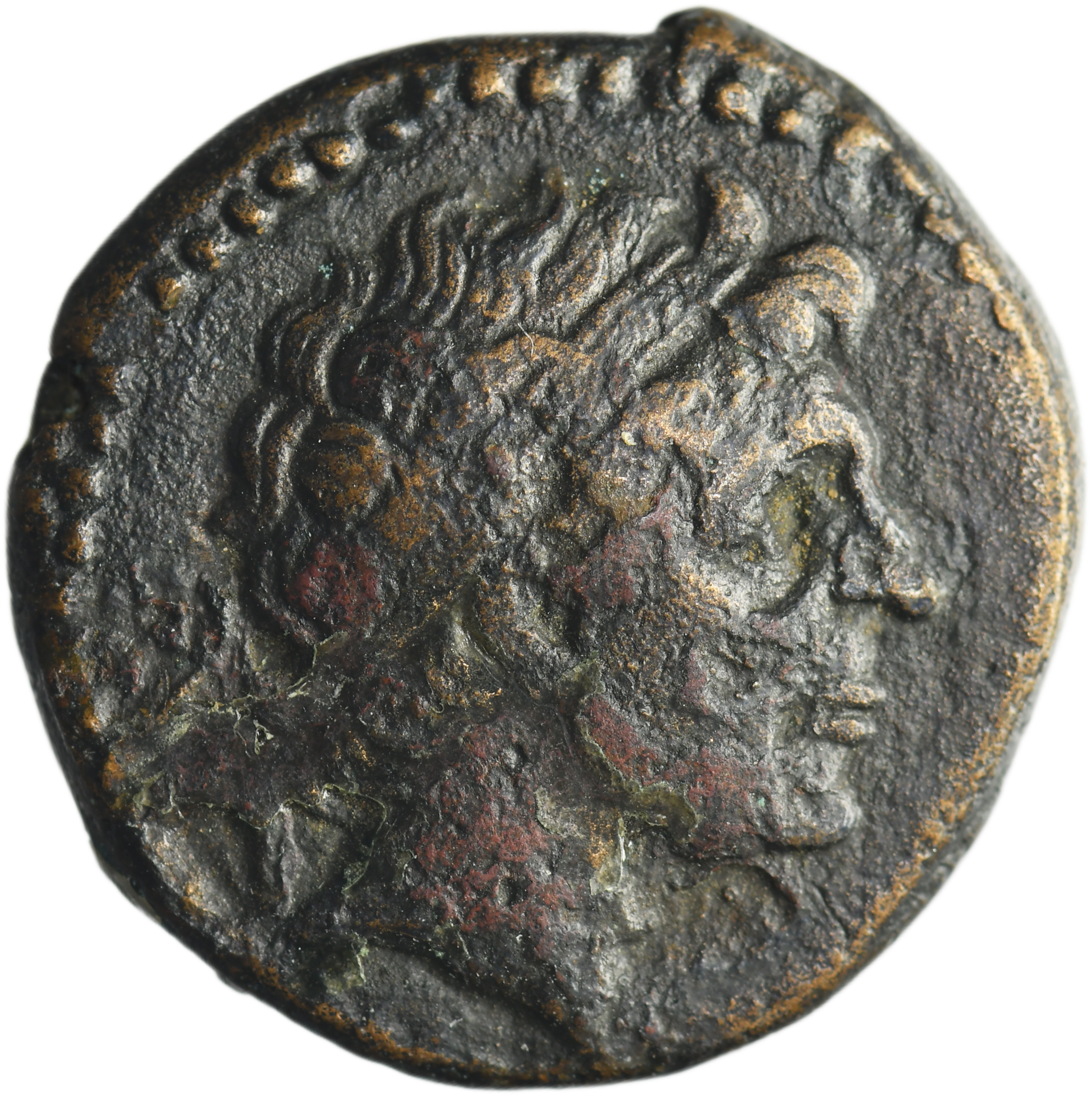
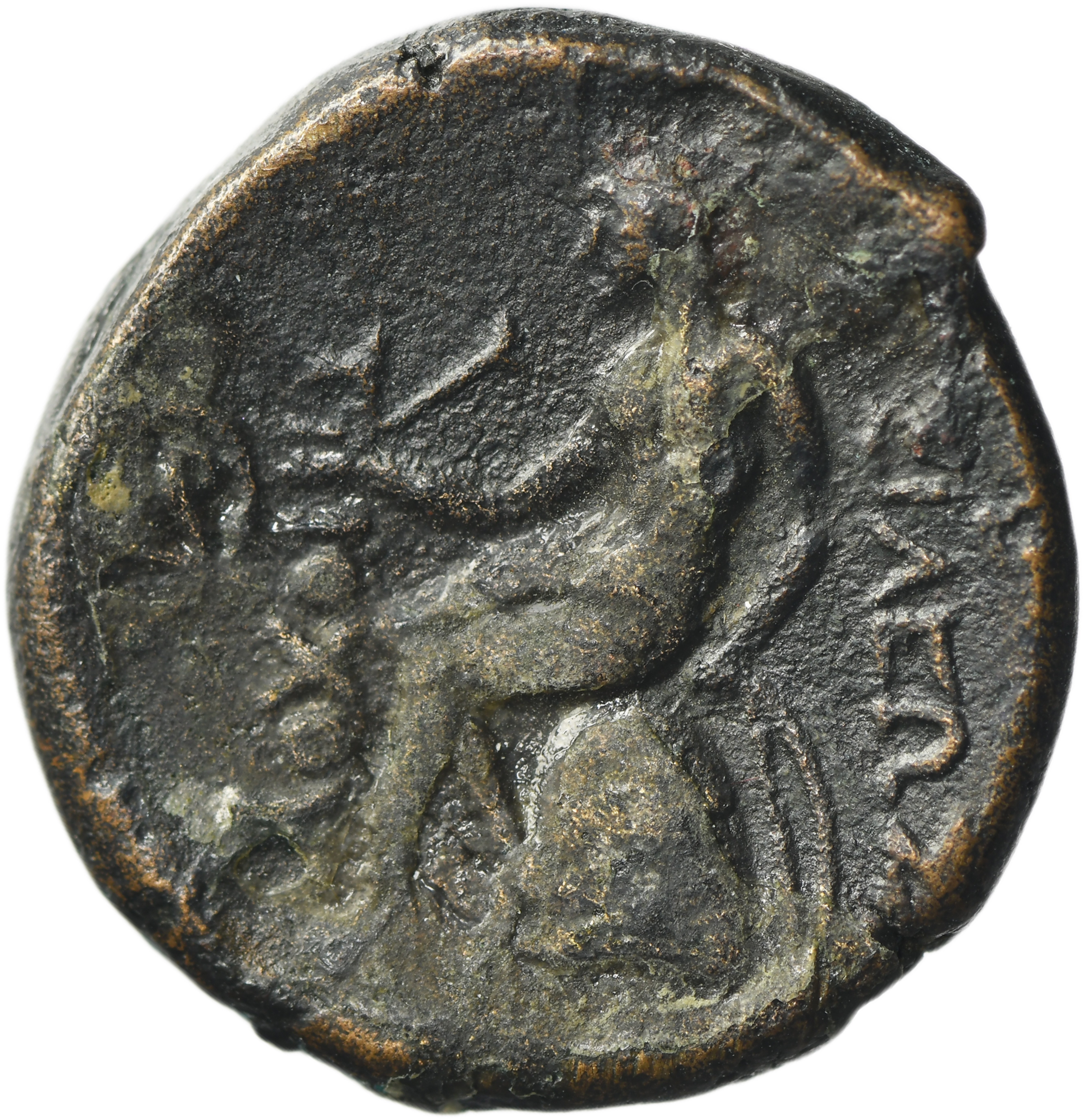


Bronze issue of Antiochus I Soter (281–261 BC), struck at the mint of Antioch, belonging to the coinage of the early Seleucid state that emerged after the division of Alexander the Great’s empire.
Antiochus I, the son of Seleucus I Nicator and a key figure in stabilizing the young kingdom, is well attested in ancient sources, including Appian and Justin, as a ruler who continued the policy of strengthening administrative structures and developing the network of Hellenistic cities across Asia.
The obverse depicts the diademed head of the ruler facing right, an iconographic type characteristic of Hellenistic monarchies, in which the diadem became the principal symbol of royal authority. The reverse shows Apollo seated on the omphalos, holding a bow and arrow, with the legend BAΣIΛEΩΣ ANTIOXOY. The image of Apollo was among the most important iconographic motifs of the Seleucid dynasty and appears consistently in its coinage, reflecting the religious traditions associated with the royal house and its connection to the sanctuary of Apollo at Didyma.
Greece
Seleucid Kingdom, Antiochos I Soter (281-261 BC), AE, Antioch mint
Obverse: diademed head right
Reverse: Apollo seated on omphalos left, holding arrow and bow, monogram on left field
BAΣIΛEΩΣ ANTIOXOY
Diameter 18 mm, weight 5.16 g











