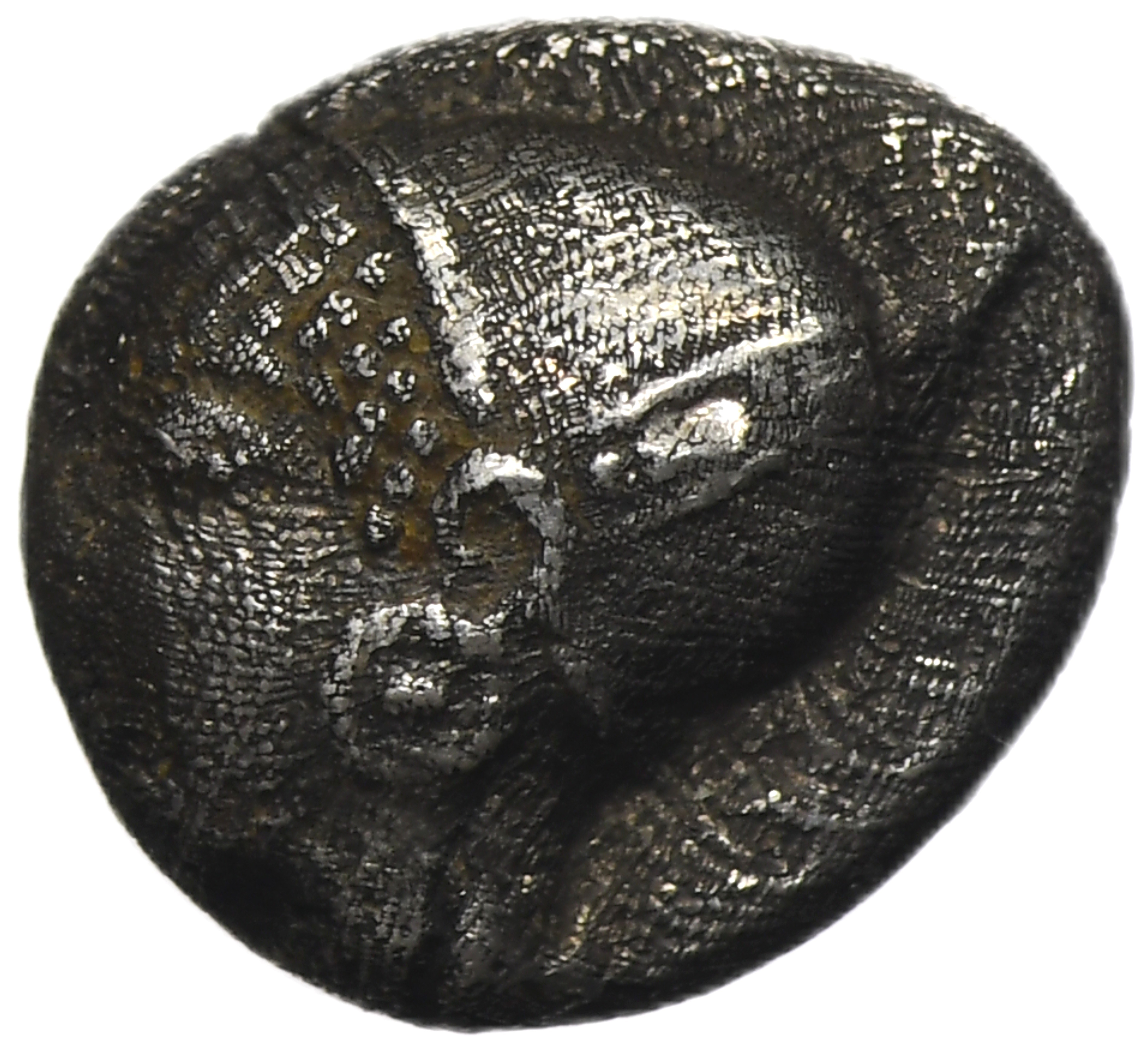
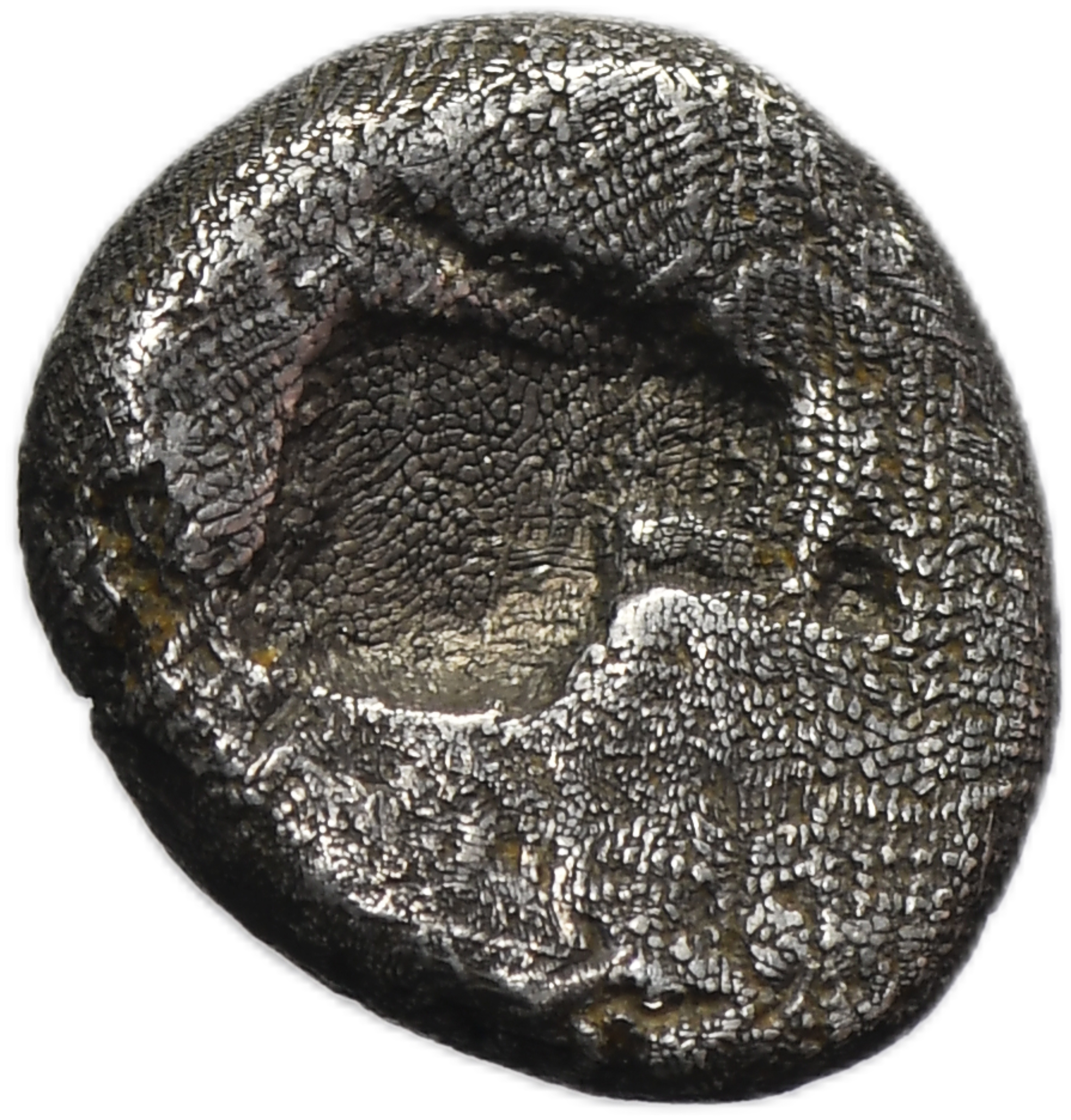


A silver diobol of Phocaea dated to approximately 521–478 BC represents the early Classical coinage of one of the most active maritime centers of Ionia in the late Archaic period.
Phocaea was renowned for its intensive commercial and colonial activity in the western Mediterranean, as attested by Herodotus. The city ranked among the earliest issuers of coinage in Asia Minor: already in the 6th century BC it struck its famous electrum staters, while simultaneously developing a system of small silver denominations.
The obverse depicts the head of a nymph facing left, rendered in a late Archaic style. Female heads, interpreted in the scholarly literature as nymphs or local personifications, appear in the coinage of Phocaea during the transitional phase between the Archaic and Classical periods.
Greece
Ionia, Phocaea, Diobol, circa 521-478 BC
Obverse: head of nymph left
Reverse: incuse square within
Diameter 9 mm, weight 1.17 g











