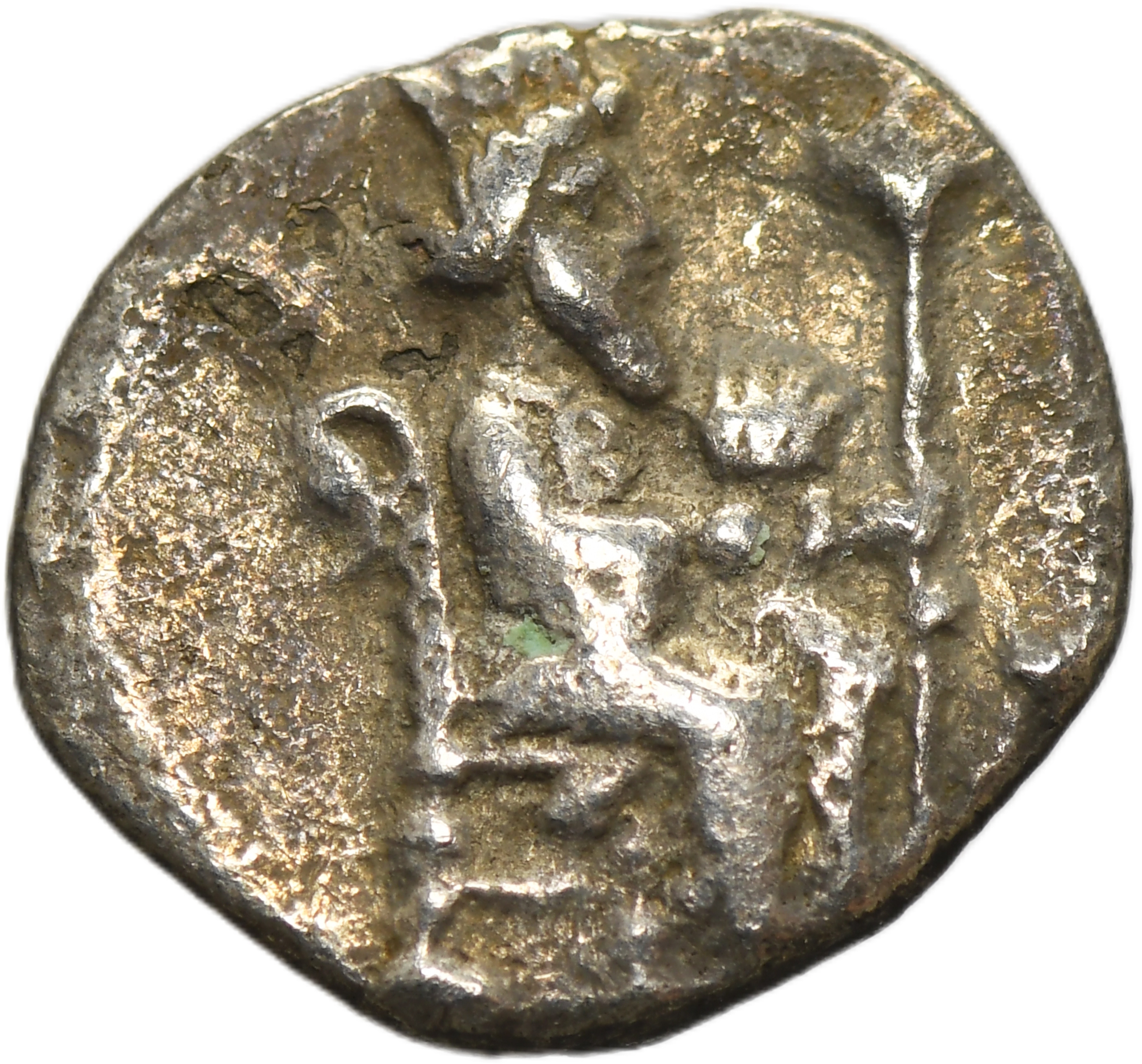
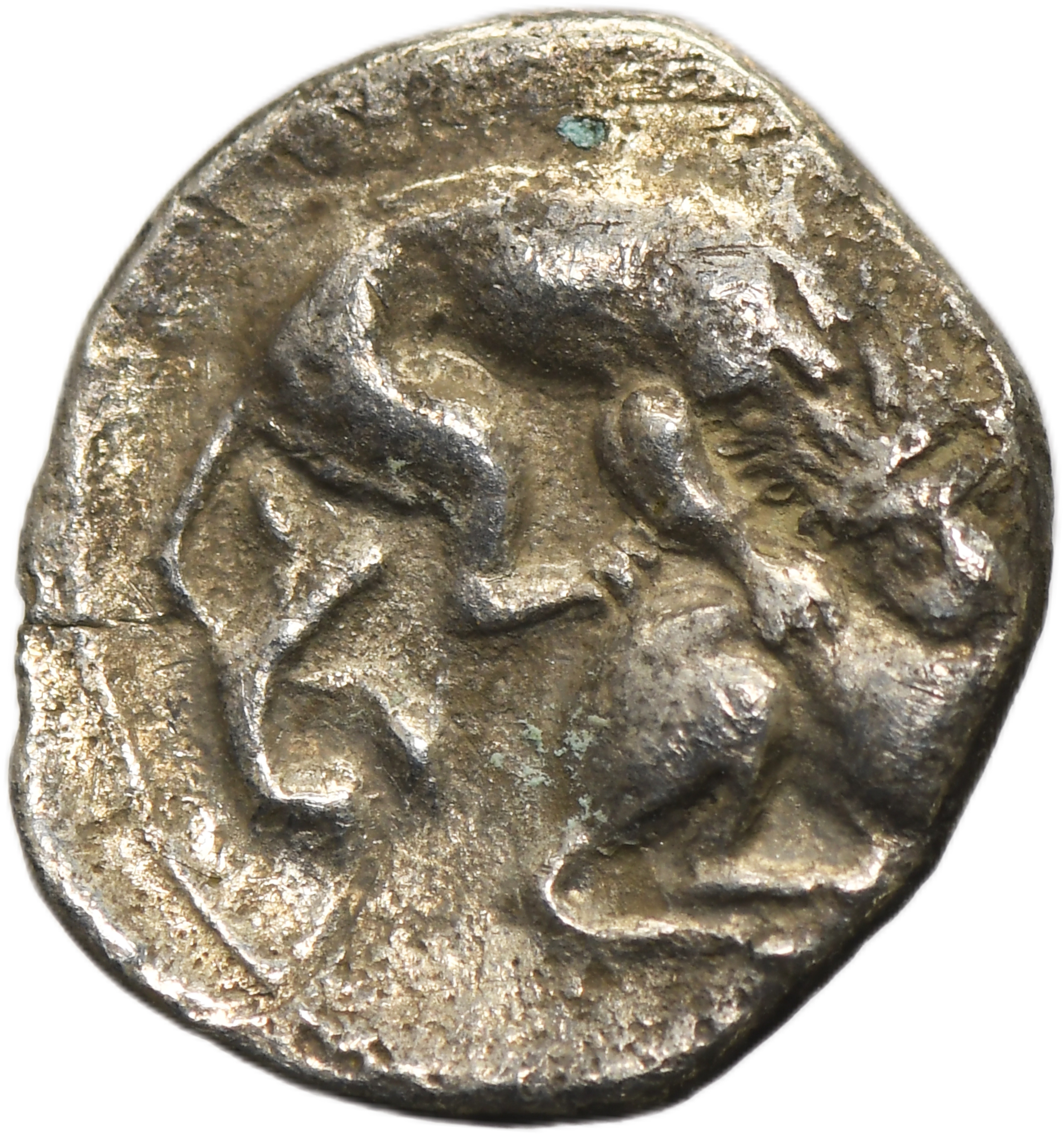


A silver obol struck at Tarsos during the satrapy of Mazaios (361/360–334 BC) ranks among the best-documented issues of Achaemenid Cilicia in the final phase of Persian rule in Asia Minor.
Mazaios, attested in historical sources as well as in numismatic material, governed Cilicia on behalf of the Persian king, and his minting activity at Tarsos is extensively recorded in the scholarly literature. These issues circulated locally and regionally until the conquest of the area by Alexander the Great in 333 BC.
The obverse depicts a figure identified in the numismatic literature as Baaltars (the local form of Baal of Tarsos), seated right on a throne and holding a lotus flower and a scepter. Modern scholarship notes that this image is sometimes interpreted as representing the Persian king, including Artaxerxes III, rendered in a local, syncretic divine form. Such iconography constitutes a documented example of the blending of Phoenician and Persian religious elements in satrapal coinage. The reverse shows a lion attacking a bull to the right, a motif well known in Near Eastern iconography and Achaemenid art, widely attested in the palace decoration of Persepolis and throughout the imperial visual repertoire.
Greece
Cilicia, Mazaios satrap, Obol 361/0-334 BC, Tarsus mint
Obverse: Artaxerxes III, crowned and in the guise of Baaltars, seated right, holding lotus flower and sceptre
Reverse: lion attacking bull right
Diameter 10 mm, weight 0.52 g











