

A bronze issue of Lysimachos, dated to 306–281 BC, was struck during the period in which one of Alexander the Great’s successors ruled over Thrace as well as extensive territories in Asia Minor and Macedonia.
Lysimachos, originally appointed strategos of Thrace after Alexander’s death in 323 BC, assumed the royal title in 306/305 BC—reflected in the legend BAΣIΛEΩΣ ΛYΣIMAXOY appearing on his coinage. His monetary production, encompassing gold, silver, and bronze, is extensively documented in numismatic scholarship and serves as an important source for the study of royal iconography in the Hellenistic period.
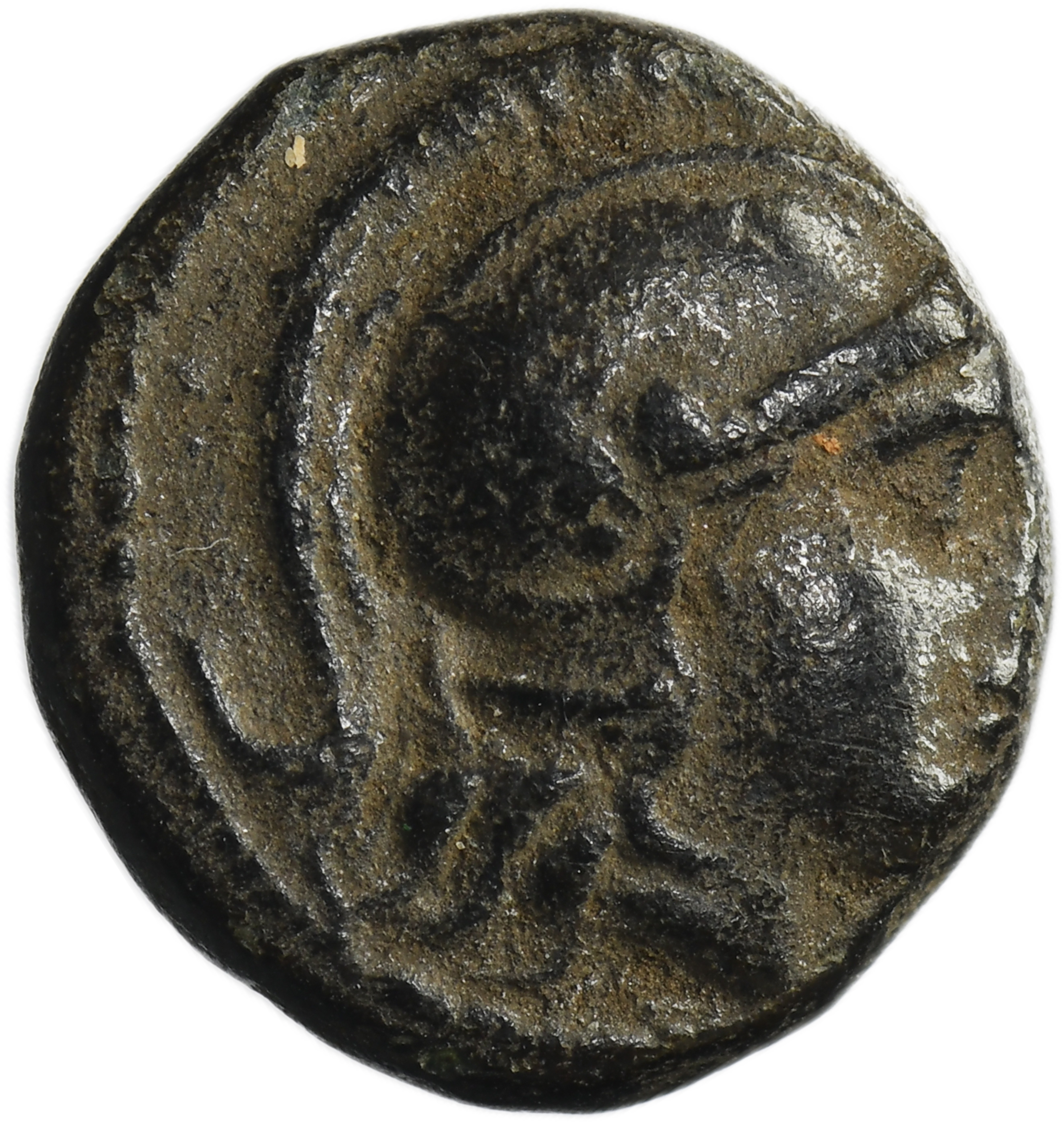
The obverse bears the head of Athena wearing a helmet, facing right, a type derived from Macedonian monetary tradition and adopted by the Diadochi as a means of legitimizing authority through reference to the goddess’s protective and martial symbolism.
Greece
Thrace, Lysimachos (306-281 BC), AE
Obverse: helmeted head of Athena right
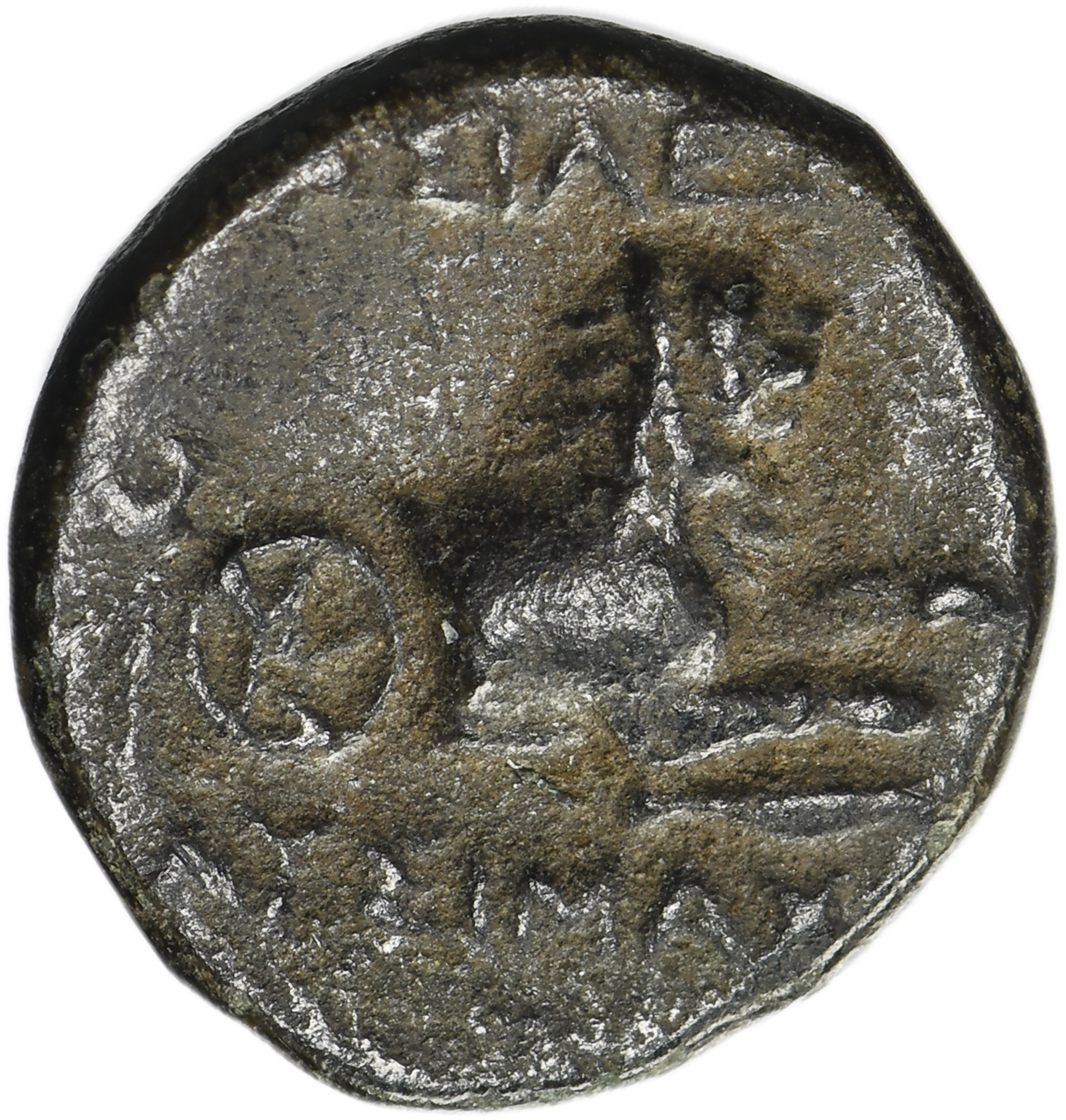
Reverse: forepart of a lion right. Controls, in left field kerykeion and YPK monogram; below, spearhead
BAΣIΛEΩΣ / ΛYΣIMAXOY
Diameter 12 mm, weight 2.08 g











