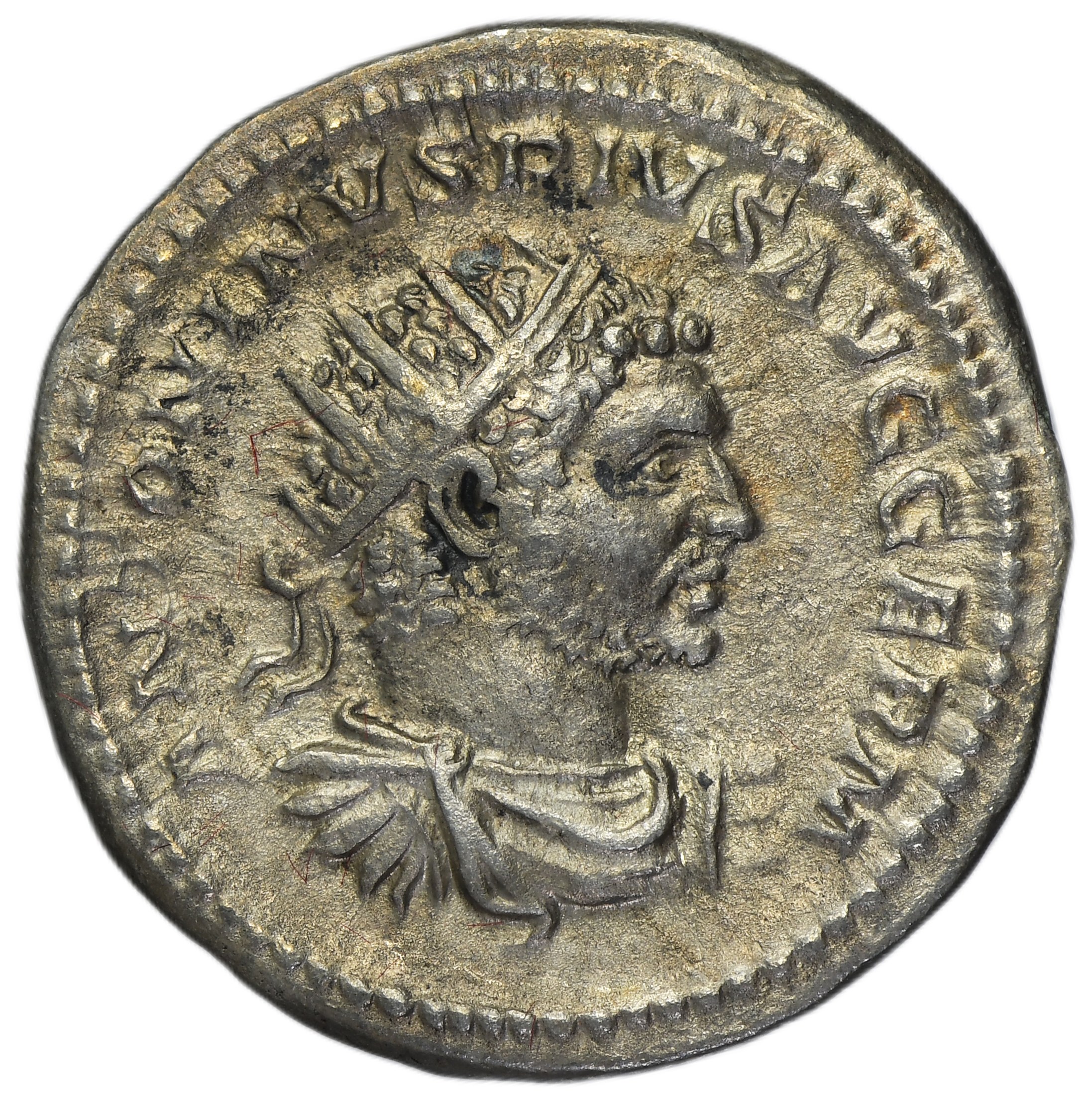
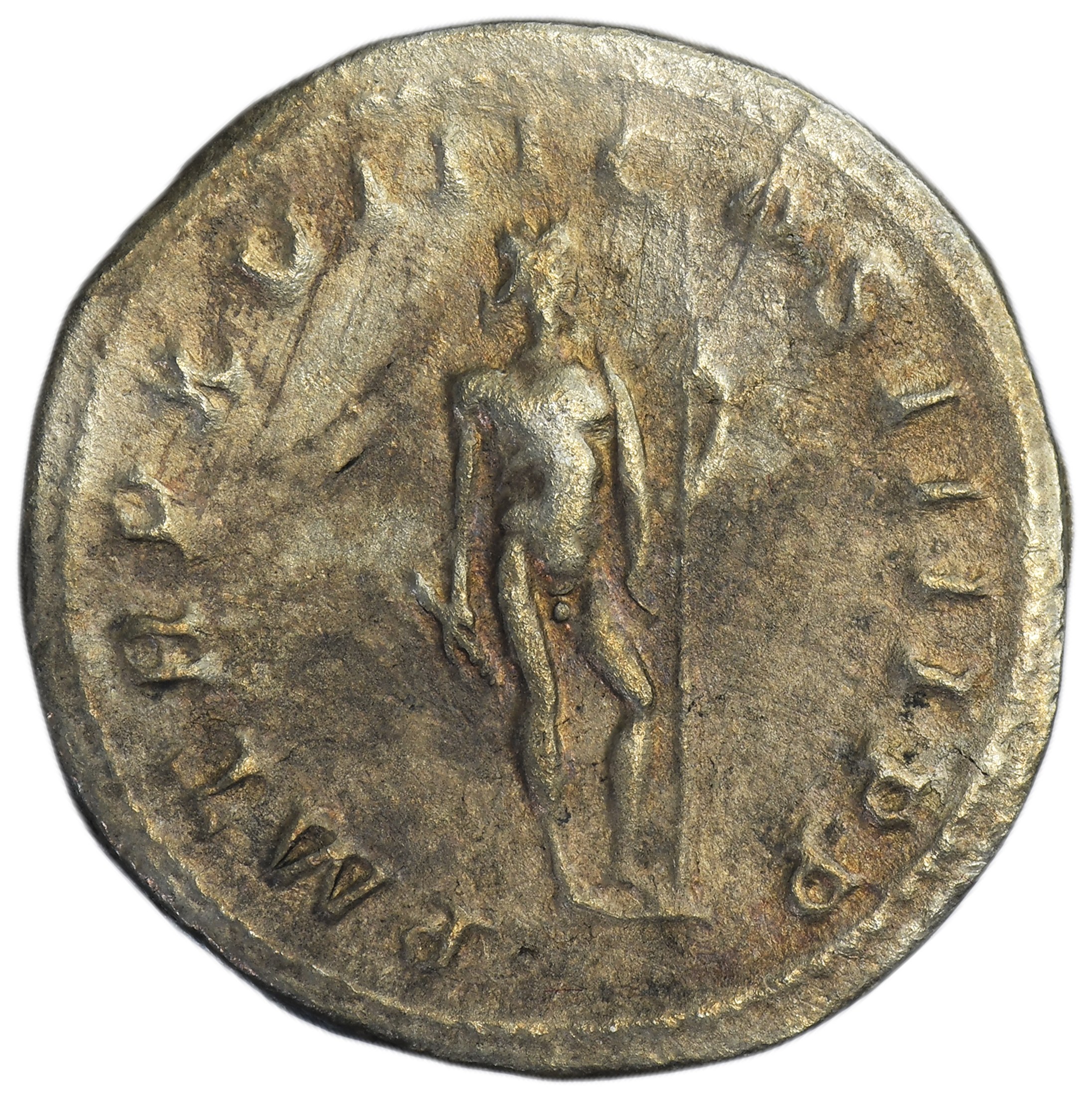


An antoninianus from the inaugural issue of the new denomination introduced by Caracalla in AD 215. The date is confirmed by the reverse title TR P XVIII, referring to the emperor’s eighteenth tenure of tribunician power.
Caracalla’s monetary reform was intended to increase the supply of currency required primarily to finance the army and costly military campaigns. The antoninianus was assigned an accounting value of two denarii, despite containing only approximately one and a half times as much silver. The radiate crown on the emperor’s portrait served as a clear indication of the higher denomination.
The reverse depicts Jupiter, supreme deity of the Roman pantheon and protector of the state and imperial authority. The god stands facing right, holding a thunderbolt and a long sceptre. His image symbolised strength, victory and the divine legitimacy of Caracalla’s rule. Particularly significant is the thunderbolt, an attribute expressing Jupiter’s supreme power and his ability to punish the enemies of Rome.
The extensive reverse legend enumerates the emperor’s principal offices and honours: high priest, holder of tribunician power for the eighteenth time, consul for the fourth time and father of the country.
An example with a very well-preserved, expressive portrait of Caracalla and a legible obverse titulature. The details of the reverse figure are more weakly preserved, although Jupiter and the principal parts of the legend remain identifiable.
An antoninianus from the denomination’s first year of issue, precisely dated by Caracalla’s eighteenth tribunician power. An interesting type combining the emperor’s monetary reform with the traditional image of Jupiter as the supreme protector of Rome and imperial rule.
Roman Imperial
Caracalla (198-217), Antoninianus 215, Rome mint
Obverse: radiate, draped and cuirased bust right
ANTONINVS PIVS AVG GERM
Reverse: Jupiter standing right holding thunderbolt and sceptre
P M TR P XVIII COS IIII P P
Diameter 23 mm, weight 4.56 g











