
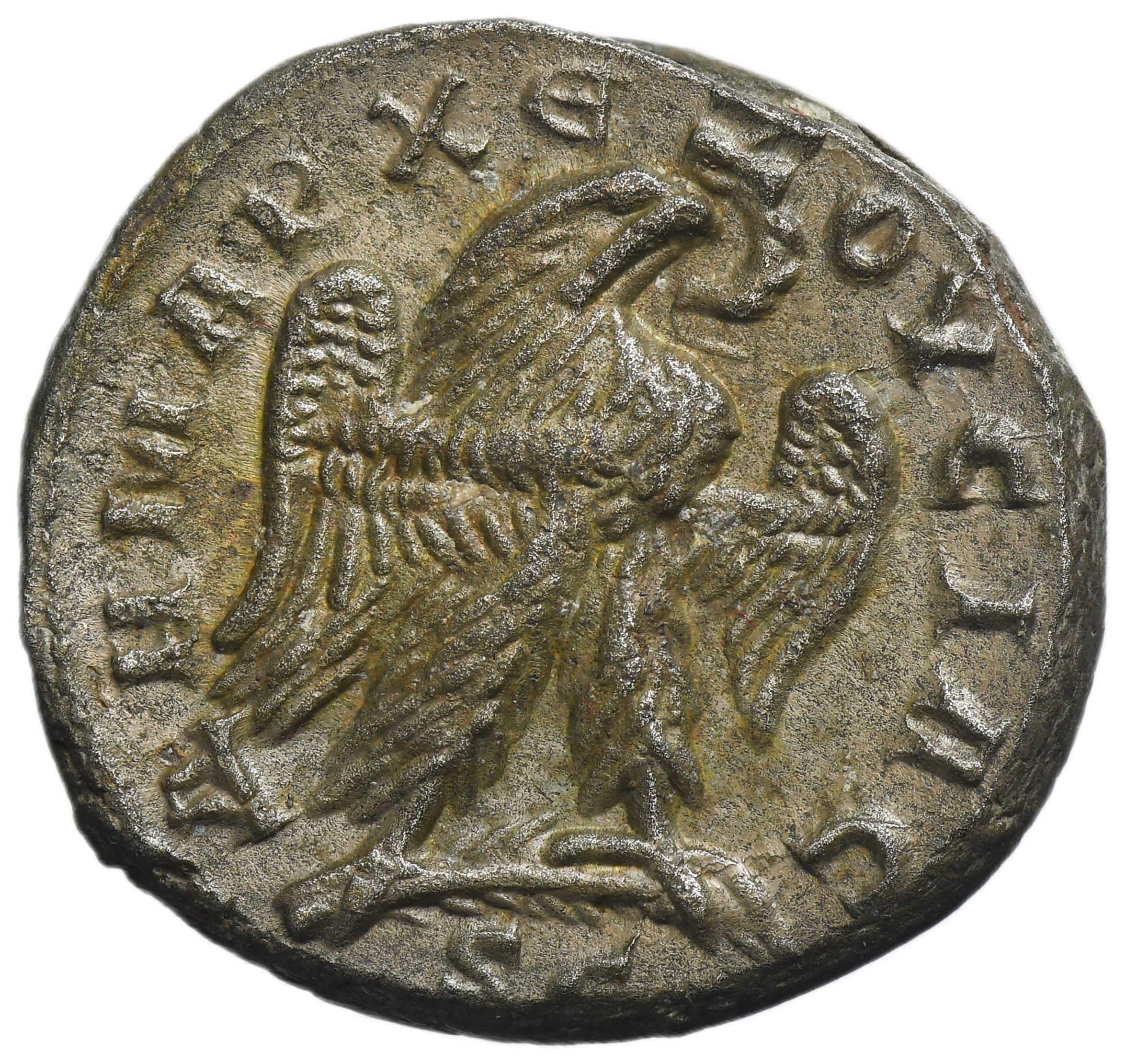
Tetradrachm of Trajan Decius (AD 249–251), struck at Antioch in Syria, belongs to the eastern provincial issues of the empire, where the long-standing tradition of tetradrachm coinage continued within a distinct regional monetary system.
The obverse shows a laureate, draped and cuirassed bust of the emperor facing right, with the Greek legend ΑΥΤ Κ Γ ΜЄ ΚΥ ΤΡΑΙΑΝΟC ΔЄΚΙΟC ΤΡΑΙΑΝΟC CЄΒ, presenting his full titulature as autokrator and augustus.
The reverse depicts an eagle standing right on a palm branch, holding a wreath in its beak, with the legend ΔΗΜΑΡΧ ЄΞΟΥCΙΑC and SC in the exergue. The eagle (aquila) was a central symbol of imperial authority and the Roman army, while the palm and wreath refer to victory and triumph. This type follows a well-established iconographic scheme used consistently in Antiochene tetradrachms since the early imperial period.
The reverse legend refers to the emperor’s tribunician power (tribunicia potestas), a standard element of imperial titulature that also serves as a chronological indicator in numismatic analysis. The inclusion of SC, derived from senatus consulto, is conventional in Antiochene coinage and does not reflect direct senatorial control over the issue.
Roman Provincial
Syria, Trajan Decius (249-251), Tetradrachm, Antioch mint
Obverse: laurate, draped and cuirassed bust right
ΑΥΤ Κ Γ ΜЄ ΚΥ ΤΡΑΙΑΝΟC ΔЄΚΙΟC CЄΒ
Reverse: eagle with spread wings standing right on palm branch, holding wreath in beak, SC in exerque
ΔΗΜΑΡΧ ЄΞΟΥCΙΑC
Diameter 25 mm, weight 13.66 g











