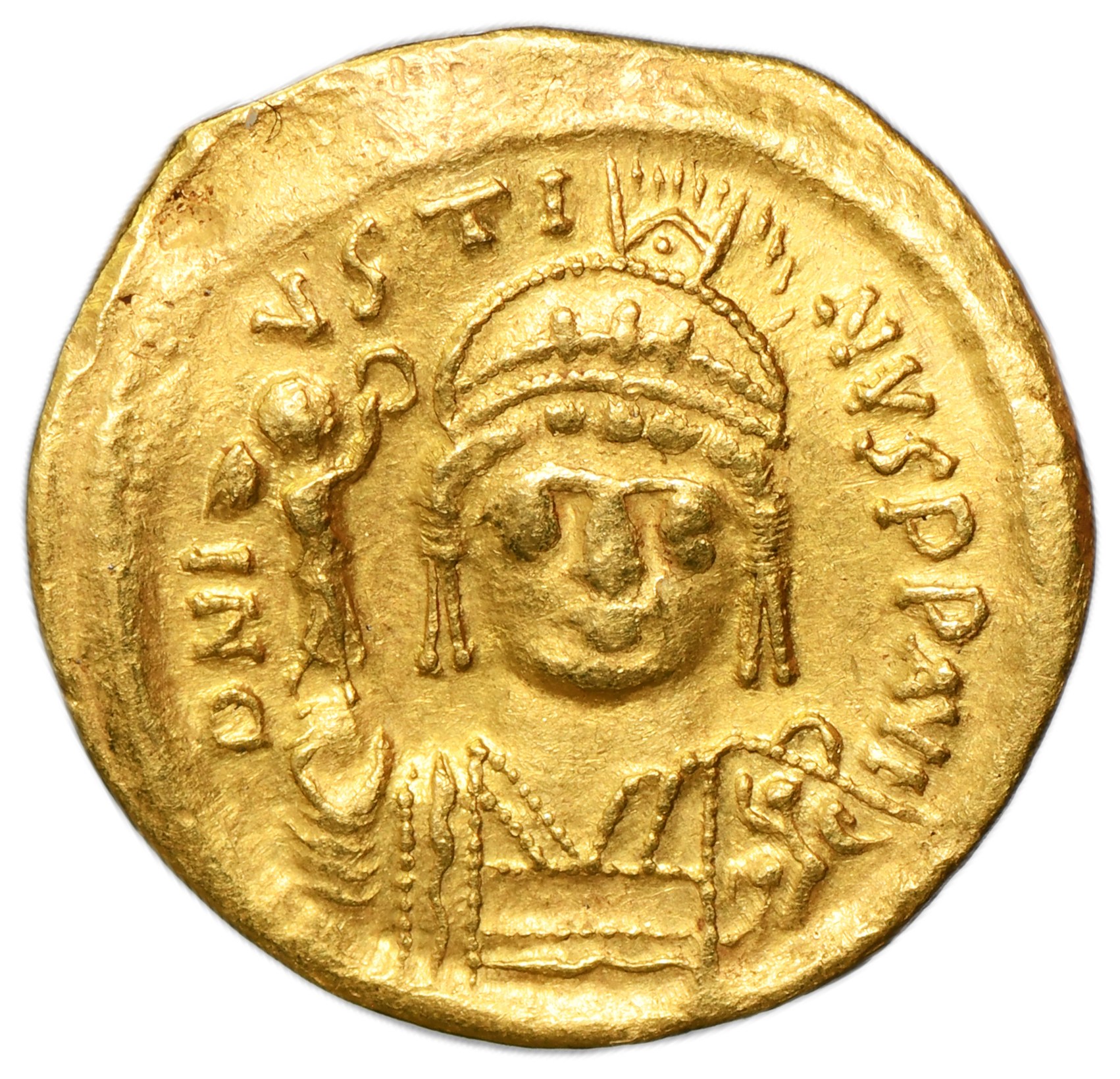
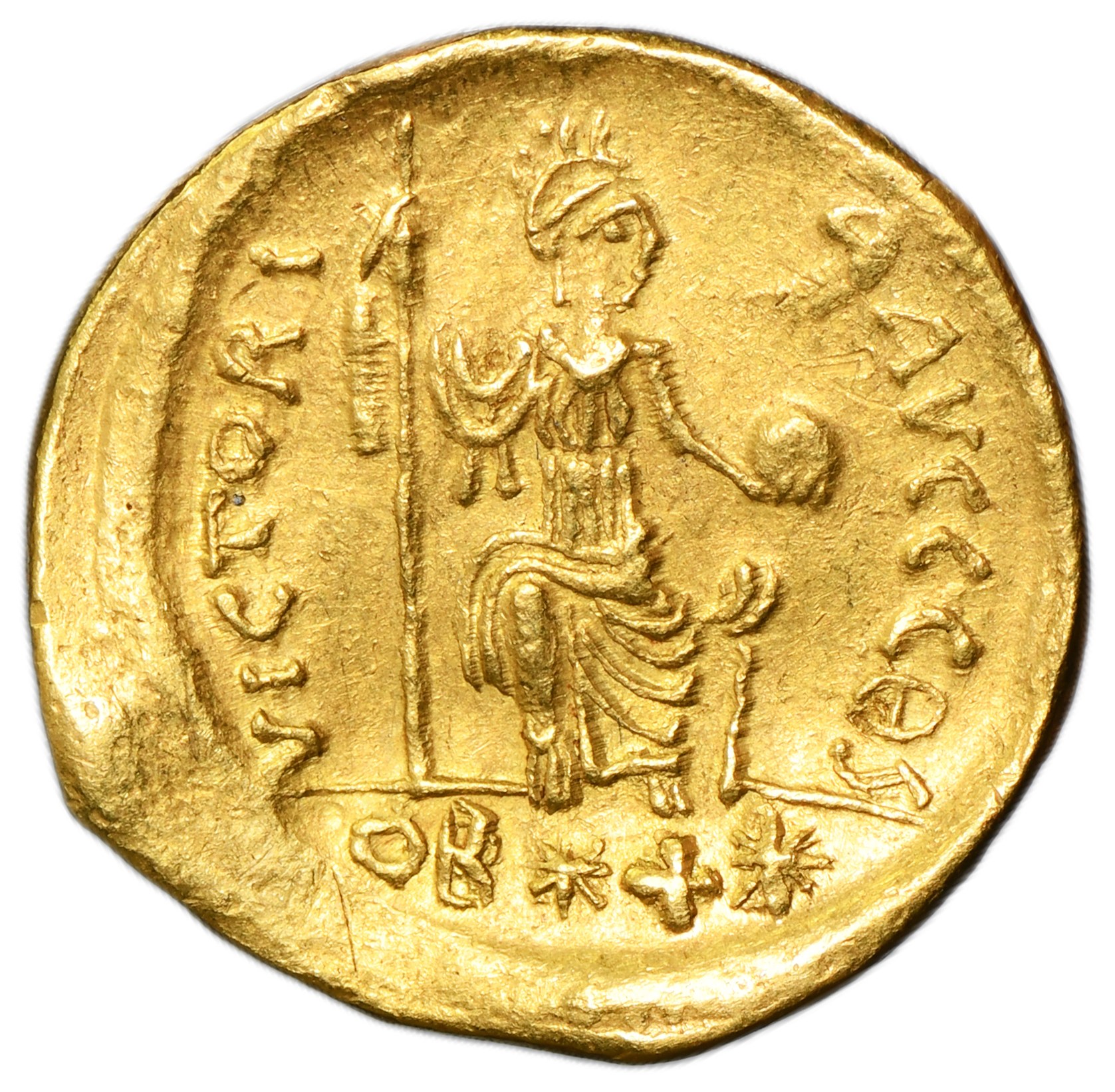
Rare and interesting type of lightweight solidus of Justin II, struck at the mint of Antioch (Theoupolis) according to the reduced weight standard of 22 siliquae.
The present solidus belongs to the distinctive group of reduced-weight issues generally referred to as lightweight solidi. Unlike the full-weight solidus, based on a standard of 24 siliquae and weighing approximately 4.5 g, coins of this type were struck to a standard of 22 siliquae, corresponding to approximately 4.05–4.10 g. At 4.07 g, the present specimen conforms almost perfectly to this reduced standard.
The precise purpose of lightweight solidi remains a subject of numismatic discussion. They have variously been associated with specific payments beyond the borders of the Empire, international trade, tribute, and payments intended for particular regions. Their reduced standard was deliberate and clearly distinguished them from regular full-weight solidi.
The issue is additionally distinguished by the unusual exergual mark OB✱+✱, rather than the standard CONOB commonly encountered on full-weight solidi. Traditionally classified as an issue of Antioch/Theoupolis, the attribution of this series has also been discussed in numismatic literature.
Ex. Armin Kaiser Collection.
Minor marks and struck from worn dies.
Byzantine Empire
Justin I (565-578), Light weight Solidus 567-578, Constantinople mint
Obverse: helmeted and cuirassed bust facing three-quarters to right, holding spear over shoulder and shield
D N IVSTINVS P P AVI
Reverse: Constantinopolis seated facing on throne, head to right, holding long scepter in her right hand and globus cruciger in her left
VICTORIA AVGGG ΘS / OB✱+✱
Gold, diameter 20 mm, weight 4.03 g











